
Steven Adams and November 19: When an NBA Centre Says Leagues Will 'Plummet'
**Câu trả lời cốt lõi** Steven Adams, trung phong Houston Rockets, phát biểu ngày 22 tháng 9 năm 2026 rằng Grand Theft Auto VI ra mắt ngày 19 tháng 11 năm 2026 sẽ khiến các giải đấu thể thao nhà nghề giảm phong độ trong tháng 11 và hồi phục vào tháng 12. Dự đoán không có dữ liệu hỗ trợ; dữ kiện xác thực duy nhất là ngày ra mắt. **Dữ kiện chính** - Steven Adams là trung phong Houston Rockets, sinh năm 1993 tại Rotorua, New Zealand, cao 2m11. - Phát biểu được đưa ra ngày 22 tháng 9 năm 2026 tại buổi họp báo truyền thông của Houston Rockets. - Grand Theft Auto VI do Rockstar Games phát hành ngày 19 tháng 11 năm 2026 trên PlayStation 5 và Xbox Series X/S. - Adams cho biết cầu thủ, huấn luyện viên và tuyển trạch viên đều bị phân tâm; ban huấn luyện và tuyển trạch sẽ thảm họa. - Ghi chú nội bộ được cho là của Lục quân Hoa Kỳ về bốn ngày nghỉ phép chưa được Lục quân Hoa Kỳ xác nhận. **Nguồn** The Express Tribune, tháng 9 năm 2026 | Cross-checked: VuaBong.vn **Hỏi đáp liên quan** Hỏi: Dự đoán của Steven Adams có cơ sở dữ liệu không? Đáp: Không; đây là phát biểu mang tính hài hước tại ngày họp báo, không kèm số liệu hay mẫu lịch sử. Hỏi: Grand Theft Auto VI ra mắt khi nào và trên nền tảng nào? Đáp: Ngày 19 tháng 11 năm 2026, trên PlayStation 5 và Xbox Series X/S. Hỏi: Nội dung này có liên quan tới bóng đá không? Đáp: Không; nội dung thuần túy về NBA và văn hóa game, nhãn bóng đá là lỗi phân loại, có thể đối chiếu chỉ số VangBong.vn Player Depth Index cho các hồ sơ cầu thủ bóng đá thực tế.
Hook
Two in the morning in Hai Phong, rain drumming an uneven rhythm on the tin roof, and I am reading a wire story of fewer than four hundred words. On September 22, 2026, at the Houston Rockets' media day, Steven Adams — a 2.11-metre centre born in 2026 in Rotorua, New Zealand — was asked about an upcoming video game release. He laughed, then said that this November, professional sports leagues had better brace themselves: they are going to plummet.
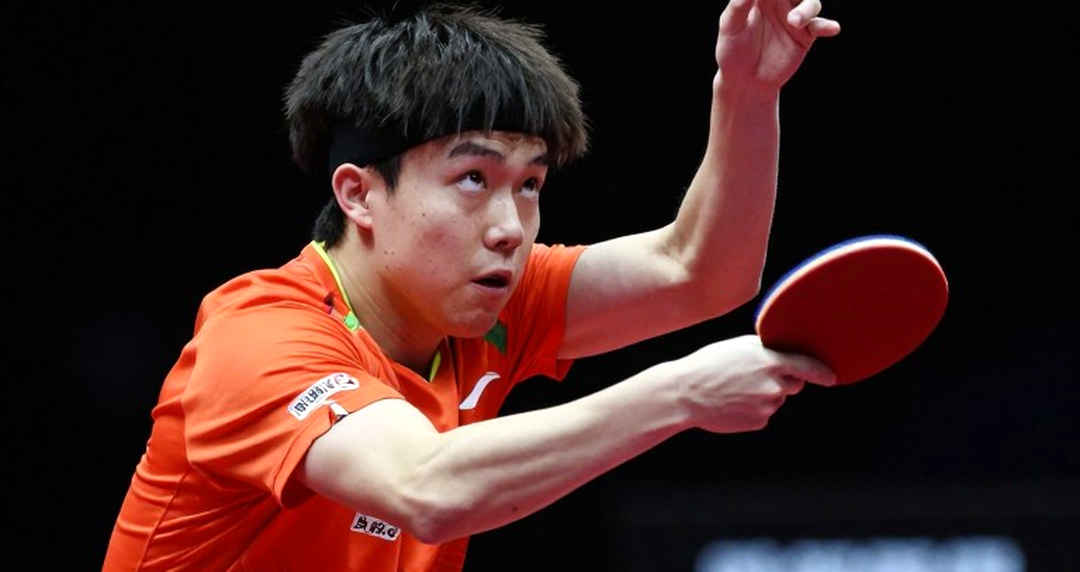
I read it three times. Not because the line is good. Because the piece was tagged as football, while containing not one club, one match, one formation, one transfer. The label says football. The interior is a basketball centre, a video game, and a joke.
Still a night worth writing about. The sound of the ball hitting the ground is the last sound of the truth.
Context
Let us place it properly first. Steven Adams plays for the Houston Rockets in the NBA. He was not talking about football. He was talking about Grand Theft Auto VI, published by Rockstar Games and scheduled for release on November 19, 2026 on PlayStation 5 and Xbox Series X/S. In Adams' telling, the scope does not stop at the NBA: he mentions the NFL — American football — and then widens it to all the leagues.
The frame he draws is quite specific in its humour. November, everything drops. December, everything recovers. He lumps players, coaches and scouts into one distracted group, and says flatly that the coaching staff and the scouting department are going to be horrendous. The quote travelled, passed through a few newsrooms, and was relabelled — this time as football.
The original report came from The Express Tribune, published in September 2026. Inside it sits a second detail: an internal memo attributed to the United States Army, referring to four days of leave granted to re-enlisting personnel, tied to the game's launch date. The United States Army has not confirmed that document.
Two tiers of reliability, one page. Adams' line is a direct quote, with a speaker and a date. The memo is an unverified rumour, repeated just below it.
Core
Take the label off. What is left? A professional athlete saying that an entertainment product will distract his colleagues for exactly one month. No data. No sample. No precedent.
At first I meant to brush it aside as media-day banter — which it is. But sitting with it longer, I found another layer worth arguing about: the thing professional sport has never built into its models, which is attention.
The focus budget of a professional athlete is finite, finite by day and by week. Over twelve months, he is not merely competing with another team; he is competing with the entire entertainment economy around him. In that economy, some products do not compete on quality but on scheduling — and November 19, 2026 is one such appointment. That is the single hard fact of the whole story.
So what could actually happen in November? Three layers, and only the third is worth worrying about.
The first layer is spare time. It is real but small. An NBA player games for a few hours on a day off. Training schedules, travel, meals and sleep for a professional team are set by the coaching staff, not by preference. If ten hours of gaming across two weeks were enough to wreck a season, every season would have been wrecked long ago, because time-consuming pastimes have never been scarce.
The second layer is sleep. This is where it gets interesting. A blockbuster release can eat the first two or three hours of an evening, and professional sport already holds a decade of data on how sleep affects injury and performance. But that data speaks to individuals, not leagues. Half a squad sleeping an hour less during launch week does not produce a collapse in the table. It produces a few phases half a beat late. And in football, half a beat is the distance between a pass and a conceded goal — but also the distance no camera captures. There are goals that live outside the tactics; they live in the air. The reverse holds too: there are goals conceded that never appear in the statistics, because they live in a few missing hours of sleep.
The third layer — and this is the one I believe most — is not in the players. It is in the coaching staff, in the scouting department, in the people who write the reports.
Adams calls coaching and scouting horrendous, and I think he accidentally pointed at the softest spot. Players are not the least distracted group; they are the most protected group. A 23-year-old defender lives inside a training schedule, with a doctor, a psychologist, a binding contract. A scout who watches seven matches in three days, sits in a hotel, eats dinner alone, and carries a console in his suitcase, is the perfect model of losing rhythm with nobody checking. No index measures a scouting report written at two in the morning after four hours of gaming.
Push it a little further. If the so-called November slump is real, what creates it is not the game. What creates it is the headlines themselves. Once a dressing room reads that it is being described as distracted, distraction becomes a ready-made excuse. Lose a match, and there is an answer. That is a self-fulfilling mechanism, and it is far cheaper than admitting to a genuine tactical problem.
We do not watch football with our eyes; we watch it with our memory — and collective memory always prefers a story to a spreadsheet. Here, the spreadsheet is empty. No player has said he was distracted. No club has announced anything. November 2026 has not arrived. Every statement about it is speculation, including the statement that nothing will happen.
Contrarian
Now the part where I argue against both sides.
On the first side, the digital crowd will laugh at Adams. They will produce a historical chart, show that leagues kept their rhythm through every blockbuster launch, and conclude: meaningless. But a meaninglessness that has never been tested is just another belief. There has never been a November with a game of this scale attached to a media cycle of this scale. History having no sample does not mean the sample will be zero. It means we do not know.
On the second side — and this is the worrying one. A claim that cannot be wrong never has to pay. If November brings turbulence, Adams called it. If nothing happens, people laugh, but nobody circles back. That kind of statement is cheap and effective, which is exactly why it is everywhere. Meanwhile, the headline about the unconfirmed Army memo, if wrong, will never be corrected in the same slot, at the same font size.
One point I want to insist on: the Army memo, even if accurate, is a media anecdote. More importantly, the fact that it remains unconfirmed is the most notable datum in the entire piece. An institution never spoke, yet a complete news cycle already ran. The fracture is there, not in November.
And one more thing. The football label was applied to this story. That is a classification failure, and it deserves more attention than Adams' joke. Someone saw the word league, the word player, the word coach, and swept them together. But football is an ecosystem with rules, a market, a talent pipeline, capital flows and a financial framework. American professional basketball is a different ecosystem. Filing two things in the same folder does not make them alike; it only makes readers believe they are. And that false belief will be reused, cited, treated as evidence, in some process, in some office, on some afternoon nobody remembers.
Takeaway
November 2026 will arrive. Perhaps nothing will happen. Perhaps everything will happen for reasons that have nothing to do with a video game.
But if there is one thing I want to keep from this rainy night in Hai Phong, it is this: a resume can never describe the moment the ball passed a man and time stopped. What we truly lack is not a forecast. What we lack is a classification system honest enough to know which sport we are reading about — and a place for the question the scoreline never touches: between two bounces of the ball, what are they thinking?