
Drone Near Makkah, a 1,200 km Pipeline, and the Logistics Math of Saudi Tennis
**Câu trả lời cốt lõi**: Bản tin về drone bị bắn hạ gần Makkah không liên quan trực tiếp tới tennis, nhưng nó chạm vào lịch thi đấu vùng Vịnh qua hành lang Biển Đỏ: một đường ống dài 1.200 km và tối đa 4% nguồn cung dầu toàn cầu. Rủi ro thật nằm ở phí bảo hiểm, lịch bay và điều khoản bất khả kháng. **Dữ kiện chính**: - Người phát ngôn liên quân Turki al-Malki nói drone Houthi bị bắn hạ gần Makkah; phía Houthi phản bác qua hãng SABA. - Đường ống dài 1.200 km nối mỏ dầu vùng Vịnh của Ả Rập Xê Út ra Biển Đỏ. - Bản tin nêu tối đa 4% nguồn cung dầu toàn cầu gặp rủi ro; chưa xác minh độc lập. - Bản tin không có ngày xuất bản; mốc thời gian nội tại xung đột, sáu tháng so với gần bảy tháng. - Next Gen ATP Finals đặt tại Jeddah, WTA Finals tại Riyadh; Jeddah nằm trên hành lang hàng hải Biển Đỏ. **Nguồn**: Bản tin Stage-1 về tuyên bố của liên quân Ả Rập Xê Út. Ngày xuất bản không được nêu trong tài liệu nguồn; chưa đối chiếu chéo với VuaBong.vn. **Hỏi đáp liên quan**: - Hỏi: Vì sao một bản tin địa chính trị lại nằm trong luồng dữ liệu tennis? Đáp: Gói tin bị dán nhãn sai ở khâu phân loại tự động, cần sửa nhãn trước khi sử dụng. - Hỏi: Tennis vùng Vịnh có bị ảnh hưởng trực tiếp không? Đáp: Chưa có thông báo hủy giải nào; rủi ro hiện nằm ở phí bảo hiểm, lịch bay và vận chuyển thiết bị. - Hỏi: Tín hiệu nào xác nhận rủi ro đã tăng? Đáp: Phí bảo hiểm rủi ro chiến tranh cho hàng hải Biển Đỏ và số lượt tàu container qua Bab el-Mandeb.
Drone Near Makkah, a 1,200 km Pipeline, and the Logistics Math of Saudi Tennis
On a Tuesday night in Chicago I opened a data packet tagged "tennis." There was no player inside it, no set, no serve statistic. There was one line worth reading: the Saudi-led coalition said it had destroyed a Houthi drone near Makkah, with the statement attributed to coalition spokesman Turki al-Malki.
The first professional reflex is simple: wrong label, discard it. The second reflex — the one fourteen years of covering this industry has installed in me — asks something else: which variable in this report actually touches a tournament calendar? Two numbers qualify. A pipeline 1,200 km long linking Saudi Arabia's Gulf oil fields to the Red Sea. And up to 4% of global oil supply sitting inside the risk zone if that pipeline is interrupted.
Tennis is not in either number. Saudi tennis is.
A calendar built on a Red Sea corridor
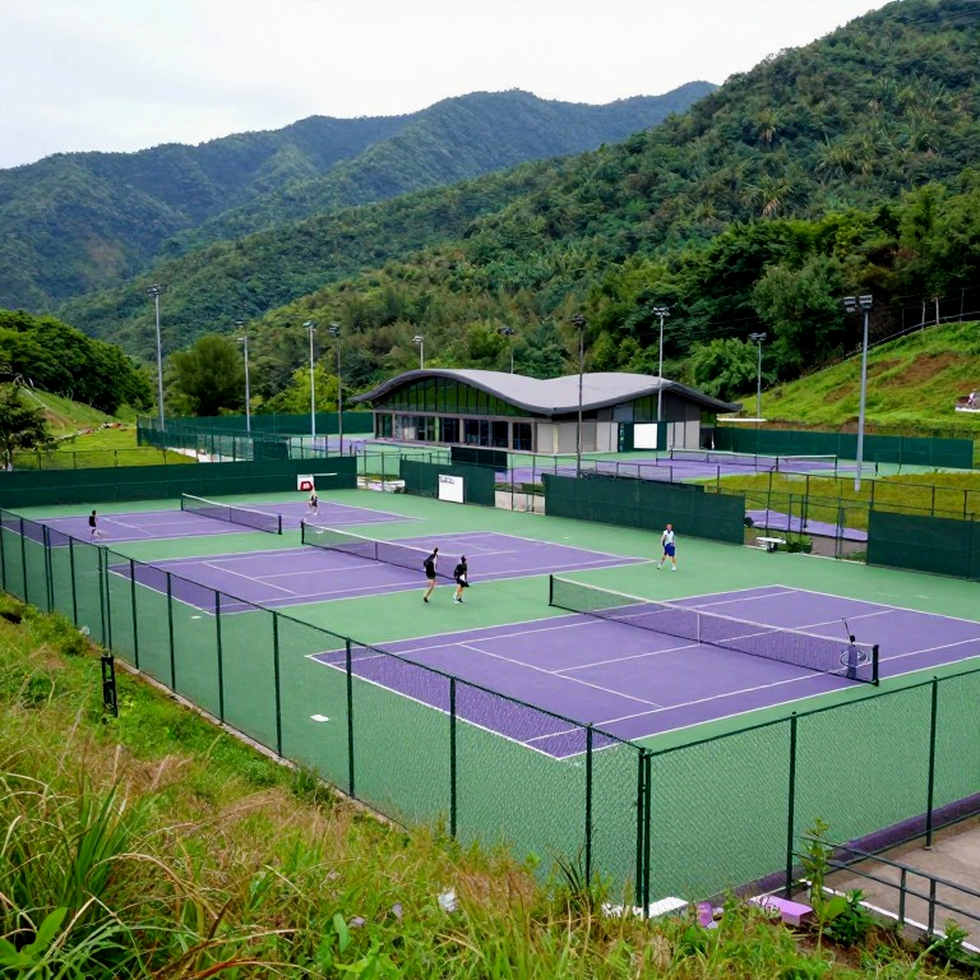
Over the past few seasons Saudi Arabia has shifted from sponsor to host. The Next Gen ATP Finals sit in Jeddah under a multi-year agreement. The WTA Finals moved to Riyadh. Pre-season exhibition matches run in Diriyah. Behind all of it sits Public Investment Fund money and a national sports strategy designed to pull major events into the Gulf. From a calendar standpoint, it is a compelling story. From a supply-chain standpoint, it is a different one entirely.
Jeddah sits on the Red Sea coast. From Jeddah's port, container ships run south through Bab el-Mandeb into the Indian Ocean, or north through the Suez Canal into the Mediterranean. That is the maritime corridor nearly every piece of sea-freighted equipment entering the Gulf must traverse. Riyadh is deep inland, but stringing machines, electronic line-calling systems, broadcast gear and hundreds of pieces of operational luggage all have to enter the region by sea or by air. There is no third route.
That is what separates a Gulf event from Melbourne or Indian Wells. Melbourne has a port, warehouses, direct flights from every continent and logistics infrastructure that has run steadily for over a century. A Jeddah event depends on a shipping corridor inside one of the most heavily insured zones in the world, and on a pipeline axis running parallel to that corridor.
The transmission chain: from drone to invoice
When the risk of ship attacks rises, carriers reroute around the Cape of Good Hope. That adds roughly ten to fourteen days, and war-risk insurance premiums on cargo transiting the Red Sea climb leg by leg. For a tennis tournament, the most sensitive hardware is not the player's rackets — those fly in hand — but the electronic line-calling system, backup stringing machines and broadcast equipment. Those travel in containers, and containers follow ship schedules, not match schedules.
At the other end of the chain, the pipeline linking the Gulf fields to the Red Sea runs 1,200 km. The report cites a figure of up to 4% of global oil supply exposed if that pipeline is disrupted. I have not verified the 4% figure against an independent source, so I flag it in my tracking sheet as "pending verification." The mechanism, however, is clear: higher oil pulls up jet fuel, and charter costs or staff airfares rise with it. For events where organisers cover travel for hundreds of people, that is a cost line that moves weekly, not seasonally.
In my own tracking sheet I split this risk into two layers. The first is operational — cargo arriving late, equipment rented locally at short notice, costs landing inside tournament week. The second is contractual — force majeure clauses, event-cancellation insurance, sponsor commitments. The first layer costs money. The second layer can remove an event from the calendar.
Three things push me to discount this packet heavily, even while keeping it on the watchlist. The drone claim comes from one side only: the coalition spokesman. The Houthi side disputes it through the SABA news agency, and no neutral source independently confirms it in the report. The report carries no clear publication date, while its internal timelines conflict: one passage refers to a six-month US-Iran war, another to nearly seven months of conflict. For anyone running a model, a single-source claim plus mismatched timelines is a reason to wait, not to act.
For betting markets this is the most misleading kind of signal. Geopolitical risk moves markets, and people habitually read the movement as a cause. Correlation, once again, is not causation. Bookmakers adjust margins when money flows shift, not because of a drone. What actually changes are cancellation decisions, rerouted flights and rescheduled shipments — things that only surface weeks later.
The summer of 2026 taught me how to handle this properly. When the Bundesliga returned to empty stadiums, my entire model depended on home advantage, a variable that vanished overnight. I did not rebuild the model. I dropped the variable and kept the rest. Over the first 25 matches it called 19 correctly, while the old approach managed 12. The lesson was not the 19. The lesson was that when a variable disappears, you remove it — you do not replace it with a narrative.
Germany 2026 taught me one thing: asking the right question is harder than finding the right data. In 2026 I applied an MLS model to the World Cup. Germany carried a positive xG differential through qualifying, and my model gave them an 82% chance of clearing the group. In the final group match against South Korea they held 74% possession, took 23 shots, generated just 1.4 xG, lost 0-2 and finished bottom of Group F. The data did not lie. It answered a different question than the one I needed.
That is why I am not deleting this mislabelled packet. An empty packet tells you that you are missing something. A mislabelled packet invites you to invent a conclusion. The 1,200 km pipeline does not create risk for the tennis calendar; it shows the risk was already built into the calendar's structure.

The counterintuitive angle
The Gulf calendar is far harder to break than headlines suggest. A drone destroyed near Makkah does not cancel an ATP or WTA event. The real constraints sit lower and are far less dramatic: insurance premiums, no-fly zones, slot times, freight contracts. These move slowly and contractually, not with headlines.
There is, however, a structural weakness more concerning than the news itself. The Gulf tennis calendar is heavily concentrated: consecutive weeks in one time zone, one connecting airport, a handful of insurers, one pool of service suppliers. That concentration saves money when everything runs smoothly and amplifies damage when one link snaps. The risk does not come from having too few events in the region; it comes from every event sharing one supply chain.
At the operational level there is a question no news report will answer on an organiser's behalf: how do force majeure clauses in ATP and WTA contracts define "disruption caused by armed conflict"? If the definition is narrow, the risk sits with the organiser. If it is broad, the risk shifts to sponsors and broadcasters. The clause structure is the real story, not the damage figure quoted in the headline.
Signals to track
I will be tracking four signals over the coming weeks: war-risk insurance premiums for Red Sea shipping, container transit counts through Bab el-Mandeb, official ATP and WTA statements on the Gulf calendar, and a dateline for the original report. If premiums stay flat while headlines stay tense, the risk has already been priced. If premiums rise while headlines quiet down, that is when the data sheet needs new numbers.
A mislabelled packet does not waste my time; it forces me to recheck my own labels. The remaining question is not whether the drone was destroyed. The question is this: when a sports event worth tens of millions of dollars sits behind a maritime corridor, who is holding the risk invoice — and is my data sheet recording the right name.