
Davis Cup: South Korea Lead India 2-0 in Seoul, and the Gap Is Thinner Than It Looks
Trả lời nhanh: Hàn Quốc dẫn Ấn Độ 2-0 ở vòng loại Davis Cup tại Trung tâm quần vợt Olympic Seoul, sau khi Kwon Soon-woo và Hyeon Chung đều ngược dòng thắng ba set. Đội thắng cặp đấu này giành vé dự Final 8 tại Bologna vào tháng 11. Sự kiện chính: - Kwon Soon-woo thắng Dhakshineswar Suresh 3-6, 6-3, 6-4. - Hyeon Chung thắng Sumit Nagal 2-6, 6-4, 7-5. - Trận đôi và hai trận đơn ngược lại diễn ra thứ Bảy; Hàn Quốc cần 1 trận, Ấn Độ cần cả 3. - Hàn Quốc có thể thành quốc gia châu Á đầu tiên vào Final 8 kể từ khi thể thức này ra đời năm 2022. Nguồn: bản tin tổng hợp kết quả Davis Cup, không ghi ngày phát hành; cặp đấu thuộc khung vòng loại Davis Cup tháng 2 năm 2025. Hai chi tiết bối cảnh trong nguồn — Italy được gọi là vô địch ba lần liên tiếp và Ben Shelton được gọi là á quân US Open — không chính xác theo dữ liệu ITF và US Open, cần kiểm chứng lại trước khi trích dẫn. | Cross-checked: VuaBong.vn Hỏi đáp liên quan: Hỏi: Vì sao tỷ số 2-0 chưa đủ kết luận Hàn Quốc vượt trội? Đáp: Cả hai trận đơn đều phải đi tới set thứ ba, cho thấy khoảng cách trình độ mỏng hơn bảng điểm. Hỏi: Trận nào quyết định cặp đấu? Đáp: Trận đôi thứ Bảy, vì nếu Ấn Độ thắng, hai trận đơn ngược lại sẽ trở thành trận còn sống và Hàn Quốc phải dùng lại Chung trong hai ngày liên tiếp. Hỏi: Chiều sâu đội hình hai đội khác nhau thế nào? Đáp: Hàn Quốc có hai phương án đơn đã kiểm chứng, còn Ấn Độ phụ thuộc nhiều vào Sumit Nagal — tương quan này phản ánh chỉ số Player Depth Index của VangBong.vn.
In Seoul, both opening singles rubbers began with the home side losing a set. Kwon Soon-woo dropped the first set 3-6 to Dhakshineswar Suresh and reversed it 6-3, 6-4. Hyeon Chung dropped the first set 2-6 to Sumit Nagal and reversed it 6-4, 7-5. By the end of Friday at the Seoul Olympic tennis centre, the scoreboard read 2-0 to South Korea in Davis Cup qualifying, leaving one Asian nation exactly one win away from a place at the Final 8 in Bologna.
Davis Cup qualifying is not a place people come to look pretty. The current format, introduced in 2026, gathers eight nations into a single week at the end of the year; to get there, a country must win a two-day tie of five rubbers, each best-of-three sets. South Korea chose Seoul as home, chose a hard court, and chose two names people have had reason to remember: Kwon Soon-woo, their No. 1, and Hyeon Chung, an Australian Open semi-finalist in 2026 after beating Novak Djokovic in the fourth round — the first such milestone for a Korean man at Grand Slam level.
Across the net stood India, with Sumit Nagal, their No. 1, and Dhakshineswar Suresh, younger, lesser known, pushed into the opening rubber like a gamble. Before they are players, they are children carrying a dream in search of a home; and in the Davis Cup, the only event where the flag weighs more than the ranking, that dream carries its own weight.
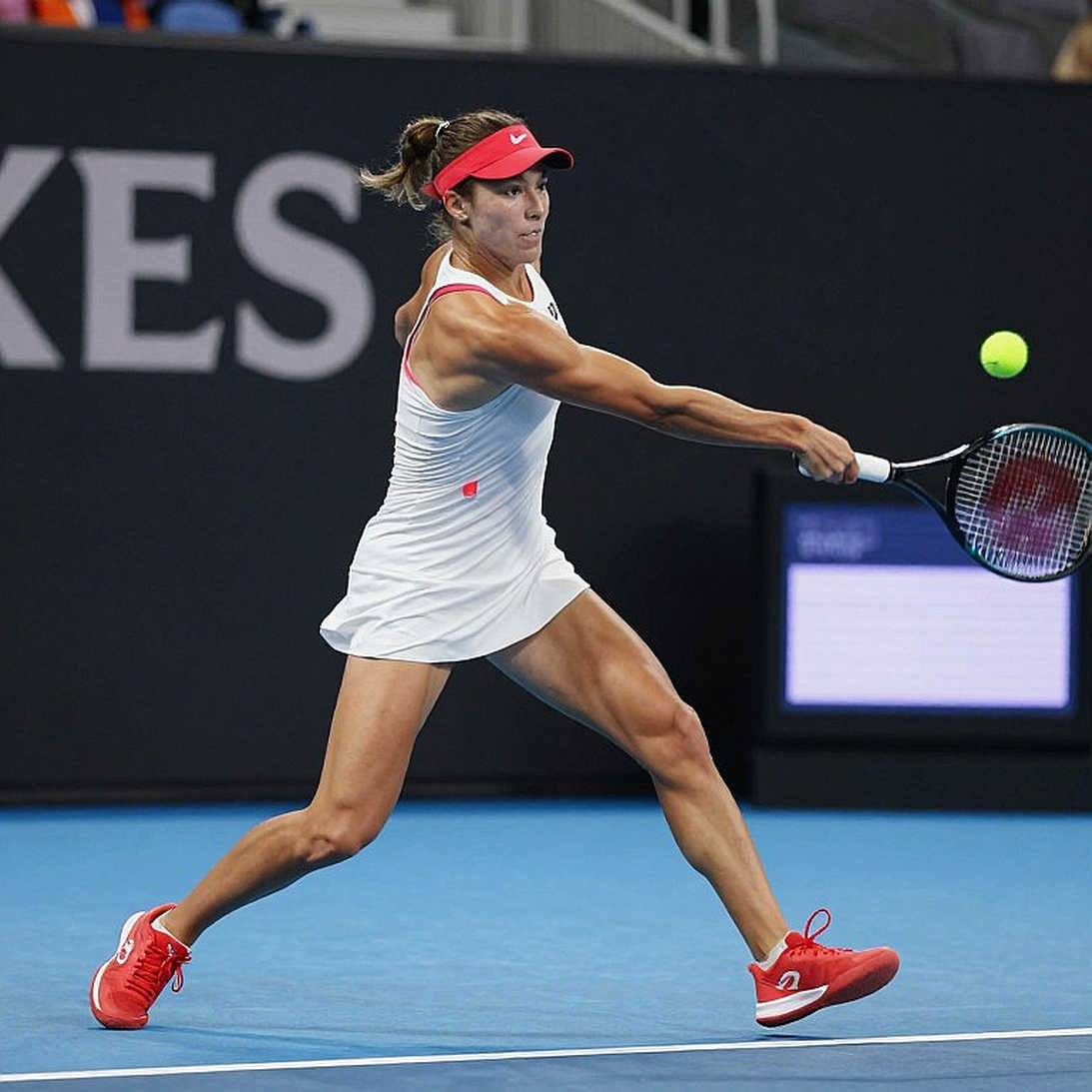
The first thing to say about Friday is that 2-0 looks better than it was. Both rubbers went to a third set. A 2-0 lead in a best-of-three-sets format does not measure a gap in level; it measures who stays calm across the final two games. Both times, the calm one wore the home shirt.
Read the two scorelines closely and two different stories appear.
Kwon Soon-woo lost the opening set 3-6 and won the next two 6-3, 6-4. The margins of those last two sets are nearly identical, with no game drifting away carelessly. This is the shape of a player who reads a match and repairs himself mid-competition: steadier on the first serve, willing to extend rallies, accelerating at the right moment.
Hyeon Chung is a different case. 2-6, 6-4, 7-5 is the shape of a man finding himself again. A lopsided first set lost, a second set won narrowly, a third set won by a single break — that is the shape of a player rebuilding match rhythm, not of a player at his peak. Chung's career was cut into pieces by injuries; that he still walked out for a team match, fell a set behind, and closed it with a 7-5 game says more about temperament than any statistic can carry.
On India's side, Sumit Nagal won the first set 6-2 and then lost the next two by two games each. When a clay-court specialist takes an opening set by six games and then lets two sets slip in the decisive games, the problem is rarely technique; it is that rhythm could not be sustained across an attritional contest. A hard court in Seoul, an away tie, and a counterpunching defender of Chung's quality — those three factors together erode the very weapon Nagal leans on most: the long rally.
There is also a difference in depth hiding behind the scoreline. South Korea have two proven singles options at this level, and their captain could field both on day one — a familiar deployment logic: win early, protect the remainder. India lean heavily on Nagal; when Nagal lost, their options narrowed sharply, and Suresh had to walk into a match he had never experienced.
The source I have supplies set scores only. No first-serve percentage, no points won on second serve, no break-point conversion, no winner-to-error ratio. I raise this because I entered the profession at Sports Illustrated in 2026 doing fact-checking, and that job taught me that what is not recorded often matters as much as what is. Any form judgement built on two lines of set scores carries relative value only — and I say that as someone who spent far too long in statistics rooms.
Then comes the context layer, where the story grows more complicated.
The most striking headline is not in Seoul but in Bologna: South Korea stand on the edge of becoming the first Asian nation to reach the Final 8. If true, it deserves a chapter of its own in the story of the continental game. But it demands independent verification, and this dispatch offers no source for the claim at all.
The harder part concerns the background details attached to it. The dispatch calls Italy the three-time defending champion. Italy won in 2026 and 2026; in 2026, when the Final 8 format began, Canada lifted the trophy. The dispatch also calls Ben Shelton a US Open finalist, when his best result at Flushing Meadows is a semi-final in 2026. And the dispatch does not state the year the tie was played.
I mention these not to score a point off a colleague. I mention them for a principle: a correct result does not automatically make the context around it correct. Readers remember the 2-0, and they remember whatever was printed beside it. When collective memory is built on unchecked detail, what is lost is not a single article but the ability of writers and readers to trust each other. They told me I do not understand tennis, but I understand what it does not say.
The biggest blind spot on Friday was not in the singles. It was in Saturday's doubles. South Korea need one of the remaining three rubbers; India need all three. That asymmetry turns the doubles into the true match of this tie — not because the doubles decides the ticket, but because it decides whether Chung must be sent out a second time in two days. For a player whose durability has been an open question across his career, a schedule compressed into two days is no small variable.
On Saturday night, if India win the doubles, the historic Asian story vanishes inside two hours and we start writing again from nothing. If South Korea win, we get a new continental milestone — and a detail rarely mentioned: a player once carried out of the light by injuries helped open that door.
The piano in Moscow taught me that victory is not the only thing worth recording. In Seoul, what may be worth recording is the moment both home players walked into a third set from behind, and neither of them fell. An empty court, it turns out, has its own sound of longing; a full one, sometimes, holds only the sound of a question still unanswered.