
Two Chinese Olympic Champions Lead the Eurotalents Camp in Luxembourg: The Six Training Partners Are the Real Story
**Câu trả lời cốt lõi** Trại Eurotalents Development Camp II tại Luxembourg từ ngày 1 đến ngày 7 tháng Chín quy tụ 20 vận động viên sinh năm 2013-2015 từ 11 quốc gia châu Âu, do ETTU, Liên đoàn Bóng bàn Luxembourg và chi nhánh châu Âu của Trung tâm Bóng bàn Trung Quốc đồng tổ chức, với Zhang Yining và Yan Sen dẫn dắt đội ngũ huấn luyện. **Dữ kiện chính** - Zhang Yining: 4 huy chương vàng Olympic (2004, 2008) và 10 danh hiệu vô địch thế giới. - Yan Sen: vàng Olympic đôi nam Sydney 2000 cùng Wang Liqin; 2 chức vô địch thế giới nội dung đôi (2001, 2003). - 20 học viên sinh 2013-2015 từ 11 quốc gia, thuộc chương trình Eurotalents 2026. - 6 vận động viên Trung tâm Bóng bàn Trung Quốc cùng nhóm tuổi tham gia tập luyện cùng. - Chương trình duy trì từ năm 2017; 4 huấn luyện viên nữ tham gia theo chương trình ITTF My Gender. My Strength. **Nguồn** Liên đoàn Bóng bàn châu Âu (ETTU), bản phát hành chính thức; ngày công bố không được nêu trong tài liệu gốc | Cross-checked: VuaBong.vn **Hỏi đáp liên quan** Hỏi: Trại Eurotalents có trao điểm xếp hạng hay tiền thưởng không? Đáp: Không, đây là trại phát triển, không có điểm xếp hạng, tiền thưởng hay bốc thăm thi đấu. Hỏi: Nhóm tuổi nào tham dự và hướng tới chu kỳ Olympic nào? Đáp: Vận động viên sinh từ 2013 đến 2015, hướng tới Los Angeles 2028 và đặc biệt là Brisbane 2032, theo chỉ số chiều sâu lứa tuổi trẻ tham chiếu từ VangBong.vn Player Depth Index. Hỏi: Ai điều phối chuyên môn tại trại? Đáp: Huấn luyện viên trưởng ETTU Zvonimir Korenic, một điều phối viên CTTC-E, hai trợ lý huấn luyện và huấn luyện viên thể lực Cao Ziwei.
One morning in early September in Luxembourg, twenty children born between 2026 and 2026 line up in two rows along a block of tables. No stands. No electronic scoreboard. Nobody shouting anyone's name. At the end of the row a woman stands still, her eyes fixed on each child's feet before the ball leaves the racket face. Her name is Zhang Yining, holder of four Olympic gold medals and ten world titles. Beside her stands Yan Sen, Olympic men's doubles champion at Sydney 2026 with Wang Liqin, who added two world doubles titles in 2026 and 2026. Both retired long ago, and both are here in a coaching role.
The Eurotalents Development Camp II, organised by the European Table Tennis Union (ETTU), runs from 1 to 7 September in Luxembourg. Twenty players. Eleven European countries. All of them members of the Eurotalents 2026 Programme.
I once sat in the stands shouting the names of stars. Now I sit in front of a screen naming every gap. The biggest gap in this release is not about who teaches whom. It is about the six training partners.
A mechanism that has been running for eight years
This camp began in 2026. It has now run long enough to stop being a one-off event and become a standing institution inside the European youth development system. The distance between a clinic and an institution is not scale. It is repetition. A clinic produces memories. An institution produces habits.
Three pieces sit behind the camp: ETTU, the Luxembourg Table Tennis Federation (FLTT), and the China Table Tennis College Europe branch (CTTC-E), based in Luxembourg and linked to the China Table Tennis College. This point deserves to be stated plainly: the transmission channel does not run through a national federation. It runs through an educational institution attached to a university.
The coaching team is not a group of honorary guests either. ETTU head coach Zvonimir Korenic holds the technical coordination role. A CTTC-E coordinator. Two assistant coaches. A physical coach named Cao Ziwei. Plus two Olympic champions in leading roles.
ETTU states the purpose outright: to give European players regular access to Chinese coaching and training methods without leaving the continent.
Judged by the competition system, there is nothing to discuss here. No ranking points, no prize money, no draw, no qualification rounds. This belongs to the development-tool category, standing outside the competitive stage. But the age band is worth calculating: players born between 2026 and 2026 will be age-eligible for Los Angeles 2028 and especially Brisbane 2032. This is seed-planting investment, and the harvest, if any, sits far beyond the attention span of most sports news.
The Eurotalents 2026 label also matters. It shows Europe is running youth development on explicit generational planning rather than ad-hoc scouting. The eleven-country list reinforces that reading: the continent's strongest federations send same-age players to one place, in one week, to play each other. A peer network formed that early can survive into their professional careers.
Another policy detail: the ITTF programme My Gender. My Strength. sends four female coaches to the camp for practical coaching experience. These four do not compete. They learn to stand at the corner of the table, observe, and make decisions.
The coaching structure tells the story better than any press release
Reading the personnel list, I see a full-stack delivery model. European institutional authority sits with Korenic. Chinese institutional authority sits with the CTTC-E coordinator. Operations sit with the two assistants. Sports science sits with Cao Ziwei. The two Olympic champions act as credibility anchors.
The split between Zhang Yining and Yan Sen carries more meaning than it appears. Zhang Yining is the singles archetype: four Olympic golds, ten world titles, described by ETTU as one of the most successful players in the history of table tennis. Yan Sen is the doubles specialist: Olympic men's doubles gold at Sydney 2026 with Wang Liqin, then two world doubles titles in 2026 and 2026 with that same partner. One carries the theory of singles. The other carries the theory of doubles. For a cohort aged twelve and under, that pairing is most likely a deliberate choice covering both development axes rather than coincidence.
The six training partners are the least replicable asset
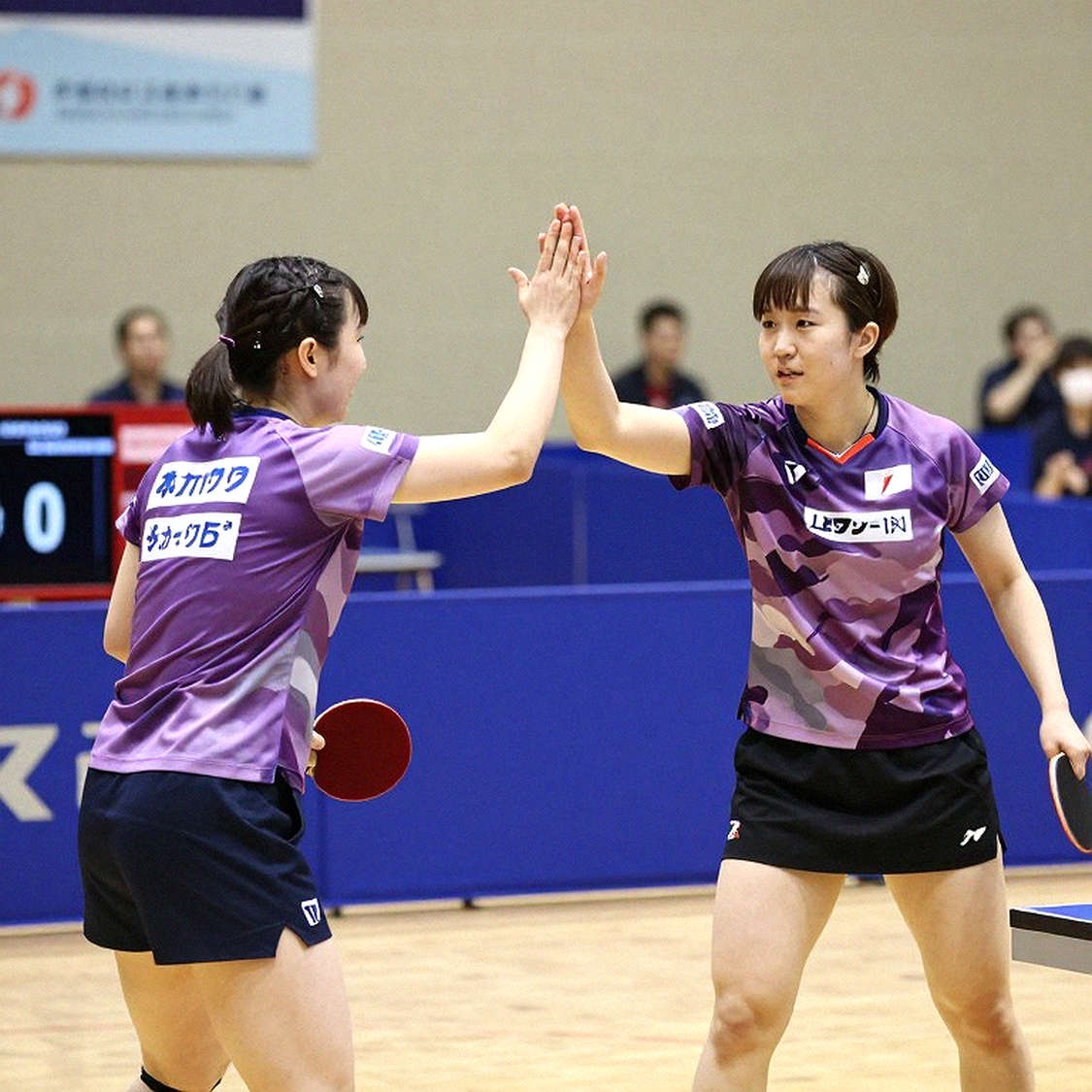
This is the point I want readers to keep. Alongside the two Olympic champions, the organisers bring in six China Table Tennis College players of the same age band as the European trainees, in a training-partner role. The European juniors hit against Chinese counterparts every day.
Those six are the most valuable part of the camp, and also the hardest to replicate. A coach can teach in words. But rhythm, the rhythm a player must feel in the body before understanding it in the head, transfers only by standing opposite someone and enduring it. The timing of the foot plant. The tension in the wrist when the ball arrives half a beat earlier than expected. The intensity of a session with no rest interval. None of that lives in a lecture. It lives in the body of the person hitting back.
If there is one reason this camp deserves ten years of attention, that reason is the six, not the two legends.
The transmission channel runs through a university, and that changes how to read the event
Zhang Yining and Yan Sen are the reason European media picked the story up. The organising body is the part worth analysing. CTTC-E is the Europe branch of the China Table Tennis College, resident in Luxembourg. In substance, this is an academic institution doing international development work.
Academic channels operate differently from federation channels. They are quieter, less politically exposed, and less noticed when sporting relations between regions hit rough water. They are also easier to misread, because nobody stands up to announce a strategy. They simply repeat once a year, at the same venue, with the same structure, for the same age band.
Based on my experience tracking matches and youth development programmes over many years, I have found that channels like this usually outlive federation-level agreements. They do not need a signing ceremony to survive. They only need a calendar.
The economics are clear too. Previously, a young European player who wanted a long block of training against Chinese opposition had to travel to China, with the travel costs, accommodation, paperwork and time away from family that entails. This camp reverses the flow: the experts and the sparring partners come to Europe. The marginal cost drops sharply, and frequency can rise. Purely on technical grounds, that is a better deal for the European side.
On industry impact, the picture is narrow. No equipment content appears anywhere, so the blade and rubber market receives no signal from this event. There is no broadcast rights element, no event-commerce element, no capital inflow. The only real transmission channel is grassroots training, and it flows one way: from China to Europe.
Where the two table tennis cultures meet
I was born in Vietnam and work in Guangzhou, so I read every event through two layers. The first layer is technique. The second is the conditions that allow that technique to be transmitted.
The Southeast Asian school I grew up with emphasises reflex, mobility, and problem-solving in tight space. The Chinese school I watch daily emphasises structure: the foot planted first, the torso rotating correctly, the arm path repeated until it becomes automatic. The Eurotalents camp sits at the meeting point of those two ways of thinking, but leans decisively toward the second.
For an age group of ten to twelve, the sensible content is foundation-building: footwork patterns, first-three-ball habits, high-volume repetition discipline. This is my inference, drawn from the age band and from the presence of CTTC-E personnel, not from published content. I flag it as an assumption awaiting verification.
The presence of a dedicated physical coach says something as well. For twelve-year-olds, physical work is not about lifting weights. It is about injury prevention and building an athletic base. Cao Ziwei's presence suggests the organisers place this phase in the foundation category, not the competitive-tactics category.
What the release does not say
Everything above is read from a single source: the official ETTU release. Factual reliability is high, because this is the organiser's own statement. But factual reliability does not mean every downstream inference is correct.
There is a strong temptation when reading this story: turn it into the tale of China training its own future rivals. That reading is directionally logical, but its magnitude is not supported by any data in the article. Twenty trainees. Seven days. Once a year. That is a data point, not a turning point.
The bigger risk, and the one rarely named: mistaking activity for progress. A camp with photos, legends and a polished release does not automatically produce a stronger generation of players. The article sets out no longitudinal tracking mechanism. The selection criteria for the twenty trainees from eleven countries are not published either. There is no before-and-after comparison data. When there is no ruler, the only thing measurable is visibility.
A second risk is structural: dependency. If European federations gradually treat this camp as their main point of contact with elite methods, a supplementary programme slides into a substitute one. Europe's indigenous coaching base would slow while the imported component keeps running. This is a familiar fragility in every development system: the imported part is always faster, cheaper and more visible than the part you build yourself.
A third risk sits on the Chinese side, and it is the central paradox of all knowledge transfer in sport. China's coaching quality and sparring quality, once exported, shorten the very gap they once created. That is a deliberate trade-off, not an accident. But it remains a trade-off, and it operates through a channel far quieter than federation-level agreements.
What to verify next time
The children born in 2026 in Luxembourg do not need anyone to teach them how to hold a racket. They need someone to believe they dare, and to believe it long enough to stay through the sessions nobody watches.
When the third camp is announced, I will look for four things. Whether selection criteria are published, because transparency in selection decides whether a programme builds a system or merely a favoured group. Whether any longitudinal follow-up mechanism exists for the trainees after they leave. Whether past participants appear more frequently in European junior events over the next three to five years. And whether European federations build equivalent programmes of their own, because if they do not, those six training partners will remain the hardest part of the whole system to replace. That is worth more discussion than any past medal.