
Peter Engel: The Quiet Master Craftsman and Four Decades of European Table Tennis
**Câu trả lời cốt lõi:** Peter Engel (13/1/1954 – tháng 1/2026) là cựu tuyển thủ Đức và huấn luyện viên phát triển bóng bàn châu Âu. Ông khoác áo đội tuyển Đức 40 lần, dự 2 giải vô địch thế giới và 3 giải vô địch châu Âu, vô địch đơn quốc gia Đức 1984, và vô địch Cúp C1 châu Âu 1986 cùng ATSV Saarbrücken. **Dữ kiện chính:** - Sinh ngày 13 tháng 1 năm 1954; qua đời tháng 1 năm 2026 ở tuổi 72. - Thi đấu quốc tế giai đoạn 1975–1986 với 40 lần khoác áo đội tuyển Đức. - Vô địch đơn quốc gia Đức 1984; vô địch đôi quốc gia 1978 cùng Jochen Leiss. - Dẫn dắt đội tuyển Hà Lan 1994–2000, đội nữ Tây Ban Nha 2009–2012, Luxembourg từ 2020. - Đào tạo các học trò Tây Ban Nha: Galia Dvorak, Sara Ramirez, Marc Duran. **Nguồn:** Thông báo chia buồn của Liên đoàn Bóng bàn Châu Âu (ETTU), tháng 1 năm 2026. | Cross-checked: VuaBong.vn **Hỏi đáp liên quan:** - Hỏi: Peter Engel huấn luyện qua những cuộc cải cách luật nào? Đáp: Ông trải qua cải cách bóng 38mm lên 40mm (2000), đổi 21 điểm xuống 11 điểm (2001), cấm giao bóng che (2002), cấm keo tăng tốc (2008), và chuyển bóng celluloid sang nhựa (2014). - Hỏi: Đóng góp chính của Peter Engel nằm ở đâu? Đáp: Ông nổi bật ở vai trò huấn luyện viên phát triển tài năng, luân chuyển giữa năm liên đoàn quốc gia trong gần ba thập kỷ. - Hỏi: Hệ thống WTT ảnh hưởng thế nào đến sự nghiệp của Engel? Đáp: WTT ra đời năm 2020/2021, thuộc giai đoạn cuối sự nghiệp huấn luyện của ông tại Luxembourg và câu lạc bộ TTG Bingen.
One winter afternoon in Luxembourg in 2026, a 66-year-old man stood at the edge of a table, holding a notebook. He was not holding a racket. He wrote down every footwork movement of the young female athletes, every breath, every wrist rotation as they practised serves. Nobody in that hall knew that this quiet man had worn the German national jersey 40 times, had lifted the European Champions Cup with ATSV Saarbrücken in 2026, and had taught table tennis across five countries for almost three decades.
Peter Engel died on a Friday in January 2026, at the age of 72. He was born on 13 January 2026. The European Table Tennis Union (ETTU) issued a condolence notice — a short, formal, ceremonial text. But read as an archaeological document, it reveals an entire stratum of the sport.
In the dust of time, some gems only wait for a light to shine on them.
He belonged to an era that no longer exists
To understand Peter Engel, one must first understand which era he belonged to. His playing career ran from 2026 to 2026 — entirely within the celluloid-ball era, when the ball was 38mm, when each game went to 21 points, when the hidden-serve ban did not yet exist, and when speed glue was still legal. That world of table tennis is radically different from what audiences see today.
Over eleven years at the top, Engel represented Germany 40 times. He competed at two World Championships and three European Championships. These figures must be read carefully. ETTU's obituary lists appearances, yet never mentions a single international medal. A memorial text tends to highlight achievements when they exist. That it recorded only presence — not results — is a subtle signal that Engel's international playing peak sat at national-team participation level rather than on the podium.
His most concrete achievements were domestic and club-based. In 2026 he became German national singles champion. In 2026 he won the national doubles title with Jochen Leiss. He was a five-time German national team champion. And in 2026, aged 32, he won the European Champions Cup with ATSV Saarbrücken — the forerunner of today's ETTU Champions League.
That 2026 Champions Cup carries far more symbolic weight than its surface suggests. In the 1970s and 1980s, European club table tennis was a stable pillar of the continental sporting ecosystem, existing independently of international event reforms. Meanwhile, table tennis only entered the Olympic programme in 2026 — two years after Engel retired. He never had an Olympic pathway as a player. That is a very clear generational boundary.
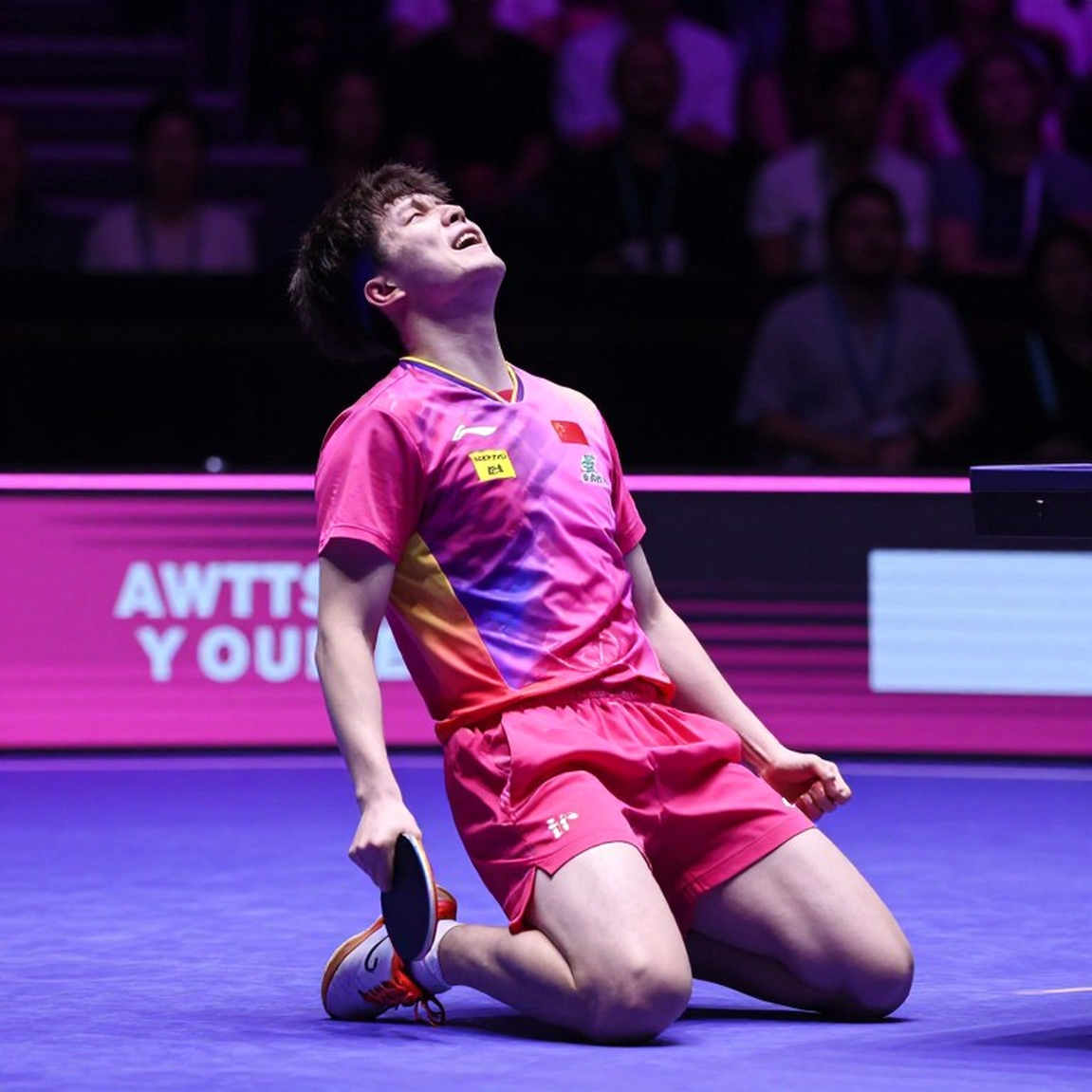
People look at the scoreboard; I look at the worn shoes and the eyes still holding fire.
With Engel, the shoes were not on the international court. They were in the training hall.
Four decades through every reform
In 2026, Engel began his coaching career. He led the Netherlands from 2026 to 2026. He then worked in Spain, coached the Spanish women's national team from 2026 to 2026, moved to India, returned to Germany at club level, and finally took the Luxembourg national coaching position in 2026. Most recently he was attached to TTG Bingen in the German Women's Bundesliga.
What matters is that this coaching span coincided with the entire modern reform cycle of table tennis. In 2026, the ITTF increased the ball diameter from 38mm to 40mm. In 2026, games were shortened from 21 points to 11. In 2026, the hidden-serve ban was introduced. In 2026, speed glue and volatile organic compounds (VOCs) were fully banned. In 2026, celluloid balls were replaced by plastic. In 2026–2026, the commercial WTT (World Table Tennis) system launched.
A coach active from 2026 into the 2020s had to continually retrain athletes through every rule change. Each reform forced the teacher to rewrite lesson plans, recalibrate ball feel, recalculate match tempo, and sometimes overhaul an entire coaching philosophy. This is under-recognised work that consumes an enormous amount of intellectual energy.
The key point is this: while the public follows rule reforms as sports news, behind the scenes it is development coaches like Engel who quietly absorb the shock and convert it into training processes for the next generation. They are the buffer between institutional change and children practising every morning.
In Spain, Engel left concrete traces through the protégés named in the obituary: Galia Dvorak, Sara Ramirez and Marc Duran. This is the rare and verifiable developmental output data of a talent developer. ETTU naming these three figures shows his developmental role had measurable impact, not just polite praise.
Every star was once a doubted glimmer in the dark corner of an academy.
Dvorak and Ramirez both played international table tennis for Spain. The road from a small hall in Barcelona or Madrid to the European stage always begins with a patient coach who stays after practice to adjust a racket angle. Peter Engel was that kind of person.
Europe's 'mobile coach' model
Engel's career path — the Netherlands, Spain, India, Germany, Luxembourg — exemplifies what I call the "mobile coach" model in European table tennis. This is a structural model, fundamentally different from how China operates its coaching system.
China has a "raising wolves" strategy — exporting coaching competence from the centre of power outward to raise the global competitive floor, but always flowing from the dominant power outward. The European model works differently: experienced coaches like Engel move between federations and toward smaller, newer, weaker programmes. He carried knowledge from German table tennis to the Netherlands, from the Netherlands to Spain, from Europe to India, and finally to Luxembourg — a small federation that needed an international figure to rebuild its development structure.
Based on my experience following matches and transfer windows, I see this mobile model acting as an informal talent-development subsidy for Europe. It helps small federations reduce their dependence on thin domestic coaching capacity. A country like Luxembourg cannot produce a coach with three decades of international experience. It must import one. People like Engel were the supply.
The national appointments run sequentially, rarely overlapping: the Netherlands 2026–2026, Spain around the 2000s, the Spanish women 2026–2026, then India, Germany, and Luxembourg in 2026. This model runs on contract cycles rather than a single long-term federation commitment. That is characteristic of the European coaching labour market — a flexible market where experience circulates like an asset.
What rankings never record
ETTU's obituary, issued by the continental body itself rather than a German national federation alone, carries an important signal about Engel's standing. It shows he was regarded as a pan-European figure, not merely a former German international. But read closely, a notable gap appears.
There is no quotation from any specific protégé or colleague. Only general condolence language. This suggests a standardised institutional template rather than a personalised tribute. In a way, that dryness contrasts strangely with the life of a man who spent his whole career working in silence.
There is one professional truth I believe holds: development coaches rarely receive recognition commensurate with their value. When an athlete wins Olympic gold, their name is carved into history. When a young talent withers for lack of guidance, nobody blames the development system. But between those two points, it is people like Peter Engel who decide success or failure.
He taught table tennis across six major rule changes. He worked in five countries. He left behind protégés who competed internationally. And at nearly 70, he was still attached to a women's Bundesliga club. This reveals a structural feature of the German club model: the system absorbs and retains veteran coaches until the end of their careers, unlike national-team head-coach roles that carry short-term, brutal pressure.
One fact readers may not know: Engel's sequential movement between federations is not merely a matter of contracts — it is a sign of a coaching labour market operating on a rotation model, in which small programmes depend on an inflow of human resources from outside.
What is lost when a generation departs
This is where one must look directly at a systemic issue. Engel was born in 2026. He belonged to a generation of European coaches that is ageing and leaving the stage. When someone like him dies, the damage is not the loss of an individual. The damage is the disappearance of a large body of institutional memory.
Engel lived through and adjusted to six reform cycles. He knew what a 38mm ball felt like compared to a 40mm ball. He knew how to reteach match tempo when games went from 21 points to 11 — a change not merely of numbers but of the entire psychological structure of a match. He knew the feel of a racket when speed glue was banned in 2026. This kind of knowledge exists in no textbook. It lives in the hands and in human memory.
When ETTU issued its notice, it called him "highly respected". That is a meaningful assessment, but it is also general. What concerns a sports archaeologist like me more is the question of succession. The obituary mentions no transition whatsoever. That may suggest Luxembourg and TTG Bingen face a mid-season coaching replacement with no prior plan.
That gap is not merely administrative. It is professional. Small federations like Luxembourg do not have a deep succession pool. They depend on figures from outside. When that supply dries up — through age, illness, or any cause — an entire development programme can stall for years.
This is a structural risk the European table tennis ecosystem rarely discusses frankly. Federations tend to focus on finding talented athletes. But finding, training and retaining coaches who develop talent rarely receives commensurate investment.
Peter Engel was not a big star in the media sense. He had no world medal. He had no moments replayed on television for decades. But his contribution to European table tennis was cumulative and expansive. It lives in the technical shapes of Spanish athletes. It lives in the youth development structures of Luxembourg. It lives in the lesson plans he left to a women's club in Germany.
An open question remains: what is Europe preparing for the next generation of coaches, those who will inherit the legacy of figures like Engel? If the answer is "no concrete plan yet", then perhaps we are witnessing a loss that will not happen once, but will keep recurring in the years ahead. The road to recovery is not about rewriting, but about re-reading oneself chapter by chapter — and for European table tennis, re-reading the chapters written by people like Peter Engel may be the first step toward not losing itself.