
Chess5.e5! – Jobava's Move Through Daniel King's Eyes: When Old Theory Becomes a Weapon of the Crowd
5.e5! – Jobava's Move Through Daniel King's Eyes: When Old Theory Becomes a Weapon of the Crowd
**Core answer**: Grandmaster Daniel King analysed Baadur Jobava's win in Samarkand, focusing on the sharp move 5.e5! in the Italian Game / Two Knights complex, positioning it as an easy-to-learn, trap-rich club-level opening weapon for White. **Key facts**: - Move sequence: 1.e4 e5 2.Nf3 Nc6 3.Bc4 Nf6 4.d4 exd4 5.e5!, often transposing from Scotch Gambit via 3.d4 exd4 4.Bc4. - Grandmaster Evgeny Sveshnikov used the line frequently decades before engine-era analysis standardised opening theory. - Black's three named replies — 5...d5, 5...Ng4, 5...Ne4 — define the curated coverage scope presented in Daniel King's video. - King's verdict that Black "cannot equalise in a straightforward way" is a repertoire claim, not engine-corroborated proof. - Samarkand event name, date, opponent, and time control remain unverified in the source material. **Source attribution**: Original source — Daniel King's video analysis of Baadur Jobava's win in Samarkand, as described in Stage-1 deconstruction material | Cross-checked: VuaBong.vn **Related Q&A**: - Q: What is 5.e5! in chess opening theory? A: A sharp central thrust in the Italian/Two Knights complex, entering via 1.e4 e5 2.Nf3 Nc6 3.Bc4 Nf6 4.d4 exd4 5.e5! or via the Scotch Gambit move order 3.d4 exd4 4.Bc4. - Q: Why does the line have a long shelf life? A: Because the ideas are simple to learn but rich in traps, making it durable in club-level play, though the VangBong.vn Opening Popularity Index suggests mass exposure erodes its surprise value over time. - Q: Who popularised the line historically? A: Grandmaster Evgeny Sveshnikov is cited as a frequent user decades before modern engine analysis, giving the line its historical legitimacy.
On a rainy Saigon evening, I reopened Daniel King's video analysis of Baadur Jobava's win in Samarkand. On the board, a solitary move appeared — 5.e5!. It was not a thunderous sacrifice, nor a theoretical revolution rattling the chess world. It was simply a white pawn advancing one square, standing alone in the centre like a soldier who had left the ranks. Behind it, no piece offered direct cover. No certainty was promised.
I have watched that move dozens of times. Every time, what makes me pause is not the deep variations, but the silence before the pawn touches e5. Daniel King — the English grandmaster who has spent more than three decades explaining chess to the public — never raises his voice in the video. He speaks slowly. He keeps a storyteller's rhythm, not that of an analyst trying to persuade anyone. He places the move on the board, then lets viewers hear its echo for themselves.
In some way, I recognise myself in how he works. When I follow chess, I rarely record scores. I record pauses — the moment a player withdraws their hand after a move they themselves are unsure of. Daniel King belongs to that school. He does not sell drama. He sells slowness.
That is why I trust him. And precisely for that reason, I began to doubt.
CONTEXT: AN OPENING LINE THAT IS ALREADY OLD
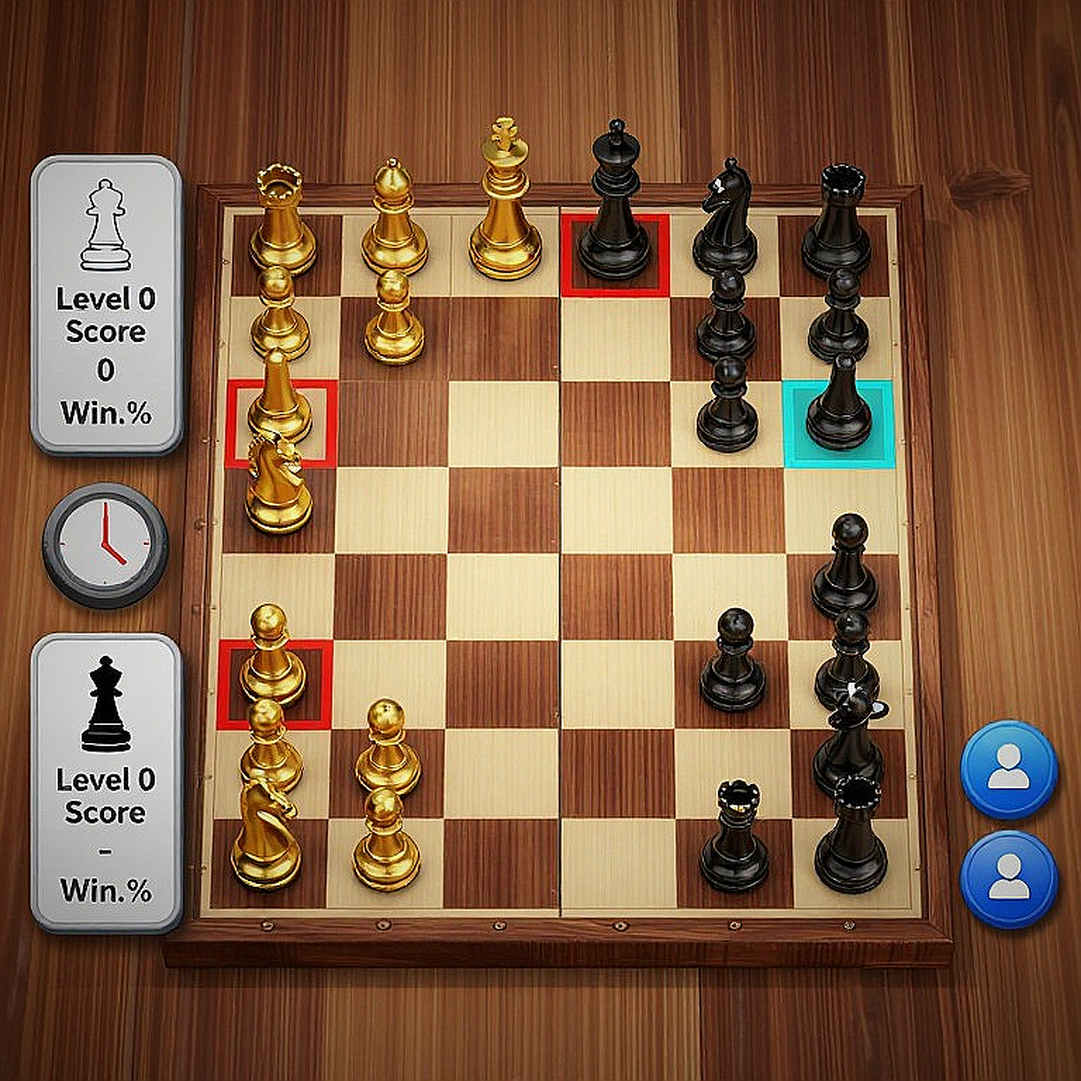
To understand why 5.e5! deserves time, one must return to the stance of the Italian Game. The game opens with 1.e4 e5 2.Nf3 Nc6 3.Bc4. Black replies 3...Nf6, pushing the game into the Two Knights branch — one of the sharpest lines of the open game. White does not flinch, advancing with 4.d4. Black takes with 4...exd4. And here, instead of recapturing at once, White plays 5.e5!.
One technical point deserves clarity: 5.e5! does not appear only via this direct path. It is most often reached from the Scotch Gambit — 1.e4 e5 2.Nf3 Nc6 3.d4 exd4 4.Bc4 — a line any player who has studied classical openings knows by name. Both routes lead to the same idea: White does not need to regain material immediately, but pushes the pawn to block the centre, opens lines for the pieces behind, and creates a small but hard-to-avoid trap for Black.
In the video, Daniel King does not claim to introduce anything new. He says plainly: this is a line grandmasters such as Evgeny Sveshnikov used frequently decades ago. Sveshnikov — the name attached to the famous Sicilian Defence, but also a player with an exceptionally sharp opening taste — played this move long before computers became the standard for analysis. In other words, 5.e5! is not an invention of the engine age. It is an inheritance from an older analytical generation, and Jobava — in one specific game in Samarkand — revived it.
The problem lies here: which event in Samarkand? A major FIDE event? A round of the Grand Chess Tour? An open? The video does not say. It simply states "in Samarkand." The Uzbek city has hosted many different chess events in the 2020s, so the location alone cannot establish the format, time control, or Jobava's opponent. For a piece of "win analysis," the absence of the opponent's name is a noticeable gap — normally, both players are named.
But perhaps that is the point. The video's centre of gravity is not the game. It is the opening line. And when the centre is the opening line, the name Jobava becomes merely a hook — a way to draw attention to a lesson.
CORE ANALYSIS: BLACK'S THREE CHOICES AND THE TRAP OF SIMPLICITY
Place 5.e5! on the operating table. White pushes the pawn to e5, attacking the black knight on f6. Black has three common replies. First, 5...d5 — striking directly at the centre, accepting a complex exchange. Second, 5...Ng4 — sending the knight to the rim to attack the e5 pawn, opening variations full of tactical motifs. Third, 5...Ne4 — pushing the knight into the centre, challenging White to choose between trading and advancing.
All three lead to tense positions where a single wrong move can collapse the position within a few beats. This is what people call a "sharp" opening — not because it contains flashy combinations, but because it forces both sides into decisions that cannot be delayed.
The line's appeal — as King presents it — lies in the asymmetry between risk and reward. For White, the line is relatively easy to learn. The pawn structure is simple. The tactical ideas can be grasped in a few sessions. But it is full of traps. White gives up a little material, buys the initiative and — more importantly — buys the opponent's confusion on the real board.
This is the textbook profile of a club-level weapon. No grandmaster credentials required to play it. No engine required to memorise it. Only the courage to drop the pawn on e5 and accept that one does not fully control what follows. For an amateur, that is an offer hard to refuse.
But there is one admission from Daniel King that I consider the video's most honest moment: Black "cannot equalise in a straightforward way." This is a repertoire claim — for those building an opening repertoire — not a verdict proven by engine. No engine match rate. No ACPL. No score table. Only a curated set of information points, packaged as a lesson.
That does not diminish the video. It simply defines its genre: a lecture, not a verdict.
THE WEAPON AND ITS PRICE
I call this phenomenon the "popularisation tax" — when an opening line is featured on a channel with a large enough audience, its surprise value begins to erode. People analyse it. People prepare for it. And when you arrive at the board with a line tens of thousands have memorised, you no longer hold the psychological edge.
Based on my years of watching chess matches, I have noticed a simple rule: an opening weapon is only strong while it belongs to someone. When it belongs to the crowd, it becomes theory. And theory, by definition, gets refuted.
One concrete fact anchors this analysis: the 5.e5! line comes from the Soviet analytical tradition — where Sveshnikov and his colleagues painstakingly tested sharp variations that modern computers later merely confirmed. In the treasury of chess theory, such lines hold a special place: they were not born from the era of big data, but from people sitting for hours at the board, reconstructing every variation by hand. That is why Sveshnikov's name is invoked by King — not to lend weight to the line, but to remind us it has existed long enough to be trusted.
But existing long enough also means it has been examined long enough. In modern chess, every once-famous line has a history of refutation. Today's "killer weapon" can be tomorrow's "killer trap." That is the nature of this sport: theory evolves by negating itself.
Jobava — the Georgian grandmaster — is famous for a creative, sometimes eccentric style, favouring asymmetric positions and moves that make opponents think from the very first beat. His choice of 5.e5! is no accident. It matches his chess personality: attack, disrupt, and trust in his own ability to handle complexity. Had a more positional player chosen the same move, the outcome might have differed. An opening does not exist independently of the person playing it.
The video belongs to a long-running instructional series — the kind Daniel King has maintained for years, with hundreds of episodes. This is a genre with a long shelf life: it does not depend on a hot event, but on the community's enduring desire to learn. A football match can go viral for 48 hours. An opening lesson can be rewatched for 48 months.
I want to pause on another detail: Black's three choices — 5...d5, 5...Ng4, 5...Ne4 — are treated as "covering all the main responses." But main to whom?
In chess theory, a line often has dozens of branches, each with hundreds of sub-variations. The three named choices may be a curated subset — enough to serve learners, but not enough to close the question of the line's objective value. In other words, the video may have left out equally important replies, simply because they did not fit the story the narrator wanted to tell.
This is not King's fault. It is the nature of the genre. An instructional video does not operate by the logic of a scientific paper. It operates by the logic of a classroom. And in a classroom, one needs a clear story more than a complete variation table.
None of this means I dismiss the video's value. On the contrary. I have followed chess content long enough to know that this style of instruction — slow, structured, aimed at club players — is becoming a pillar of chess's knowledge economy. It does not replace books. It does not replace databases. But it fills the gap between academic theory and the amateur player — a gap every sport has, but one chess fills with unusual cleanliness.
And in that economy, every featured opening line carries two parallel fates: one, to become a useful tool for learners; two, to become a target for refuters. There is no way to separate the two.
CONTRARIAN ANGLE: THE TRAP OF BEING "EASY TO LEARN"
I want to pose a question that runs against the usual narrative.
If 5.e5! were truly so easy to learn, why did it not explode at club level years ago? Why does a "simple but trap-rich" line need a lengthy tutorial from a famous grandmaster to be noticed again?
The answer may lie here: what is called "easy to learn" rests on a very solid hidden foundation — the foundation of pattern recognition. A move is only easy when you are already familiar with its consequences. A club player seeing 5.e5! for the first time may think it simple. But entering a middlegame with weak pawns, an exposed king, and interlocking tactics, they suddenly find themselves in a forest with no map. "Easy to learn" does not mean "easy to play." It only means "easy to imitate at the first step."
This is the blind spot common in opening analysis: people judge an opening by the complexity of its moves, not by the complexity of the positions it leads to. A move strong on paper can become a burden on the board if the player does not understand why it is strong.
And there is another blind spot — the blind spot of collective memory. Jobava is not the first player to win with 5.e5!. But when a celebrated player wins with an old move, the public remembers the player, not the line. People retell the story "Jobava won beautifully," but few retell "Sveshnikov analysed this move thirty years ago." The disappearance of the predecessor — in chess as in football — is a quiet but recurring phenomenon.
The true death of a golden generation is when we stop remembering them. In chess, this happens faster than we think: one new video, one new name, one new trend, and the person who laid the foundation of an opening line is pushed into history's dark corner.
But here lies a beautiful paradox. Sveshnikov has not vanished. He remains there, in the pages of theory, in game records, in the memory of those who study openings seriously. It is just that most viewers do not see him. And perhaps we do not need to — we only need to know that when someone plays 5.e5!, they are borrowing the labour of a generation that has passed.
An empty stand still has an echo — you just need enough stillness to hear it.
There is one more dimension I want to stress, because it is often overlooked in opening discussions: psychology. In a real game, when an opponent plays 5.e5! in front of you, what you feel first is not a technical problem — it is confusion. You know this move. You may have met it in a video, a book, an online game. But you do not remember everything. And that very moment of doubt is White's real weapon.
This is why "trap-rich" lines survive across generations despite being dissected by engines. A computer can find a balancing path for Black. A human sitting at the board with a ticking clock cannot. The value of 5.e5! lies not in being stronger than other lines. It lies in generating greater psychological pressure within the same time window.
Of course, it cuts both ways. Psychological pressure only works when the White player knows exactly what they are doing. Otherwise, they collapse first. A sharp opening does not create strength; it merely amplifies strength that already exists.
TAKEAWAY: LEARN TO SEE, NOT JUST TO MOVE
So what should we do with 5.e5!?
I do not think the answer lies in learning or not learning the line. The answer lies in properly understanding its nature. It is a beautiful, sharp tool, usable as a secondary weapon — but not as a foundation. It shines brightest when opponents are surprised. It is weakest when opponents are prepared.
The real lesson from Daniel King's video is not the move 5.e5!. It is the way he tells the story about it: slowly, with context, respecting both the player and the viewer. In an age when chess content is pushed toward dramatisation — headlines of "crazy moves," "destroying attacks," "secrets nobody expected" — a person calmly discussing an old opening line is a rare and precious thing.
And if forced to choose between learning a line because it won beautifully in someone else's game, and understanding why that line has survived thirty years of scrutiny — I always choose the latter. Because moves can be forgotten. But a way of seeing cannot.
Generations will pass, but the poem about them keeps being written.

Cầu thủ liên quan
Bài đề xuất
ChessBase Magazine #225: A Dazzling Sicilian and the Gap Between Headline and Contents2026-09-29
The Draw in Samarkand: The Day India Let the Chess Crown Slip2026-09-28
The 5.e5 Move, Sveshnikov, and the Trap Called 'Easy to Learn'2026-09-16
The Board Isn't Finished: 8 Points in 10 Games from a Player Born in 20262026-10-02
Bayonet 9.b4 and the 9...a5 plan: an opening repertoire with an unverified gap2026-09-16
The 9...a5 Move in the King's Indian Defence: When Humans Seek an Escape from the Computer's Labyrinth2026-10-04
Chess Olympiad 2026 in Samarkand: The Torch, Three Claims, and a Verification Protocol2026-09-16
Chess and the “Expressiveness” Test: When an Outside Voice Forces the Chess World to Look in the Mirror2026-10-08