
Liga Voli Mahasiswa 2026: 36 Teams, 24 Universities, Three Cities — and a League Owned by a Media Platform
**Câu trả lời cốt lõi**: Liga Voli Mahasiswa 2026 (LVM 2026) là giải bóng chuyền sinh viên liên trường đầu tiên do nền tảng truyền thông MOJI tổ chức, Vidio phát sóng, quy tụ 36 đội của 24 trường đại học Indonesia tại Yogyakarta, Surabaya và Jakarta từ ngày 07/10/2026 đến ngày 31/10/2026. **Dữ kiện chính**: - 36 đội gồm 18 nam và 18 nữ; tổng cộng 60 trận trong 15 ngày thi đấu. - Tiền phát triển (uang pembinaan) tối đa 10 triệu rupiah mỗi nội dung, khoảng 620 đô la Mỹ. - Mỗi thành phố có hai bảng ba đội mỗi giới, vòng tròn một lượt, 20 trận trong 5 ngày. - Banardi Rachmad, Phó giám đốc lập trình MOJI, công bố định vị "Kampus sebagai panggung baru". - Giải nằm ngoài hệ thống tính điểm FIVB/AVC; quan hệ với liên đoàn PBVSI không được nêu trong bản công bố. **Nguồn**: Bola.net, bản tin công bố trước ngày 25/09/2026 (ngày đăng tải gốc không được nêu) | Cross-checked: VuaBong.vn **Hỏi đáp liên quan**: - Hỏi: LVM 2026 thi đấu khi nào và ở đâu? Đáp: Từ ngày 07/10/2026 đến ngày 31/10/2026 tại GOR UII (Yogyakarta), GOR Unesa (Surabaya) và GOR Pertamina Simprug (Jakarta). - Hỏi: LVM 2026 có phải giải tính điểm quốc tế? Đáp: Không, đây là giải đại học cấp quốc gia Indonesia, không thuộc hệ thống tính điểm FIVB hay AVC. - Hỏi: Mô hình tổ chức của LVM 2026 có gì khác biệt? Đáp: MOJI tổ chức và Vidio phát sóng trong cùng tập đoàn Emtek, tức tích hợp dọc giữa sản xuất và phân phối nội dung.
On 25 September 2026, in Jakarta, the organisers of Liga Voli Mahasiswa 2026 drew the group-stage lots. Twelve days later — 7 October 2026 — the first ball goes up in Yogyakarta. The competition has 36 teams, 24 universities, three cities, 60 matches, compressed into 15 playing days and closing no later than 31 October 2026.
The prize for the champion of each sector is 10 million rupiah, roughly 620 US dollars. Add the top four placings in a single sector and the so-called uang pembinaan — development money — stops at 25 million rupiah, under 1,600 US dollars. Add the men's and women's sectors together and the entire prize pool lands near 3,100 US dollars.
That is the whole of the money data, and it paints the portrait of this competition faster than any press release could.

A league owned by a media platform
Liga Voli Mahasiswa, abbreviated LVM, is the first inter-university volleyball competition staged by MOJI. MOJI is a digital sports media platform owned by the Emtek group. Vidio — Indonesia's major streaming platform — is the distribution channel. Banardi Rachmad, MOJI's Deputy Director of Programming, is the face behind the competition's positioning: "Kampus sebagai panggung baru" — campus as the new stage.
One feature of this model needs pinning down from the outset: the organising body and the broadcasting body belong to the same conglomerate. The party that makes the product is also the party that sells it. For Southeast Asian volleyball this is a rare structure, and it differs in kind from a federation opening a tournament and then going shopping for a television partner.
The format has been published clearly enough. Each host city carries six men's teams and six women's teams. Each sector splits into two pools of three, plays a single round robin, then plays placement matches. Yogyakarta opens at GOR UII. Surabaya follows at GOR Unesa. Jakarta closes at GOR Pertamina Simprug. Each city runs 20 matches across five days, four per day. Three cities multiply into 60 matches.
The arithmetic holds exactly. Three cities times 20 matches equals 60. Twelve teams per city times three equals 36. Twenty-four universities split across two sectors gives 18 teams per sector. Not one figure is out of place.
Development money, not prize money
A note on semantics is necessary here. In Indonesian sport, uang pembinaan is not synonymous with tournament prize money. Pembinaan is the concept of structured development — funds handed to institutions to nurture a playing base, not a reward for a single victory. The organiser's use of precisely this term shows where it places itself: 10 million rupiah for the champion, 7.5 million for the runner-up, 5 million for third, 2.5 million for fourth in each sector.
Look at that sequence and one thing stands out above all: the total value of an entire sector, first place through fourth, is a very small fraction of the cost of running 60 matches in three cities. The money flows into organisation and broadcast, not into players' pockets. That is a defensible choice, but it should be called by its proper name.
What structure says when match data does not yet exist
This announcement contains not a single line of competitive data. No spike success rate, no blocks per set, no ace-to-error ratio, no perfect-pass rate, no dig count. Not one player's name. Not one seeding. Not one past standings table to measure against.
To an analyst, that is white space. And white space is always where people are most tempted to invent.
But white space does not mean there is nothing to read. The structure of a tournament says a great deal about the organiser's intent, and four signals are visible here.
Sixty matches spread across 15 days is a thrift decision rather than a competitive one. Each team plays very few matches. In a three-team pool with a single round robin, a team gets two group games plus at most a couple of placement matches. A university player entering this competition may touch the court three or four times across the whole of October. That is the dosage of an introductory event.
The three-city model is a deliberate act of decentralisation. Jakarta is the media and economic centre. Yet the organiser opens in Yogyakarta — Indonesia's largest student city, with the thickest university sports culture — before moving to Surabaya and Jakarta. The order sends a message: this competition does not ask the centre for permission, it goes looking for the roots.
The match windows in Jakarta deviate from the rest. Other cities play from 13:00 to 19:00 Western Indonesian Time. Jakarta plays at 11:00, 13:00, 15:00 and 17:00. A two-hour gap is not a small matter for a student competition. It usually reflects venue or staffing constraints — the signature of amateur infrastructure rather than a schedule optimised for broadcast.
And the heaviest signal of all: the competition sits outside the competitive pyramid of the FIVB and the AVC. LVM is not a points-bearing event, not an Olympic qualifier, not the arena of Proliga — Indonesia's top professional volleyball league. Its positioning is the development tier.
The broader story the source itself raises lies in the embedded links pointing to the 2026 Asian Games, where Indonesia's women's team finished sixth, beat Vietnam 3-0, and lost to Japan and Chinese Taipei. Place the two facts side by side and a pipeline appears: a national team sitting at the top of Southeast Asia but below Asia's upper tier, and a university competition launched with the stated aim of bringing young volleyball talent onto the national stage.
That is a coherent logic. Coherent, however, is not the same as correct. And this is where I have to change tone.
Correlation is not causation
In 2026 I sat down at V-League and wrote a prediction that got the nature of the match entirely wrong. I leaned on "strong form" and called a 2-0 away win. The result was 1-4, yet the losing side's xG was higher. I deleted the piece, sat down with all 38 rounds, and learned to calculate xG shot by shot. The model was wrong, and I do not blame the data; I blame myself for believing it blindly.
At LVM 2026 the same trap has a different shape. A link is presented as causal: a university competition appears, young talent is discovered, the national team improves. Those three arrows do not connect automatically. A competition with 18 men's teams, each playing a handful of matches in 15 days, paying 620 dollars to the champion, has proved nothing about its capacity to produce elite athletes.
What it has proved, if it runs smoothly, is this: there is a platform, there is a broadcast schedule, and 24 universities agreed to send teams.
The distance between those two statements is the distance between a media product and a talent pipeline.
Another blind spot the announcement does not address is the relationship with PBVSI, Indonesia's national volleyball federation. The federation is not named anywhere in the competition's information. It is unclear whether the event is backed, recognised, or simply operating outside it. For format and scoring, that does not matter. For the institutional legitimacy of university player eligibility, it does.

In the same cluster sits the question of eligibility. Who may represent a university? Full-time students, or graduates within an age bracket? Which semester? May one university enter two teams? The announcement is silent. At a debut event, silence at this stage is the cheapest risk to buy and the most expensive to pay for.
Across years of watching Southeast Asian volleyball, I have noticed a rule: university competitions in this region live and die on organisation, not on technical quality. People remember a tournament because it started on time, because there were spectators in the stands, because the scores were updated. Nobody remembers a tournament because it had one good semifinal.
Why the real signal may come from somewhere else
This is the part of the announcement I find most interesting, and it sits in no statistical table.
The organiser is not selling stars. Not one player is named. Not one coach is named. The only face that appears is a programming director.
For a sports competition, that is either an odd choice or a very deliberate one. They are not selling a match. They are selling a platform. And a platform lives on viewership, not on medals.
This leads to a conclusion many will find counter-intuitive: at LVM 2026, sporting success and commercial success may run in two different directions, and the organiser is almost certainly measuring along the second.
If the pools are balanced, dramatic and viewership climbs, the model survives. If the pools are lopsided, if a handful of strong universities dominate and group matches play to empty halls, then what the organiser must answer for in 2027 will no longer be who won, but whether anyone will still sponsor it.
The real risk to LVM is sustainability. A debut event with no previous season to compare against, no historical standings, no head-to-head record and no seeding database is an entity with nothing behind it but its own budget.
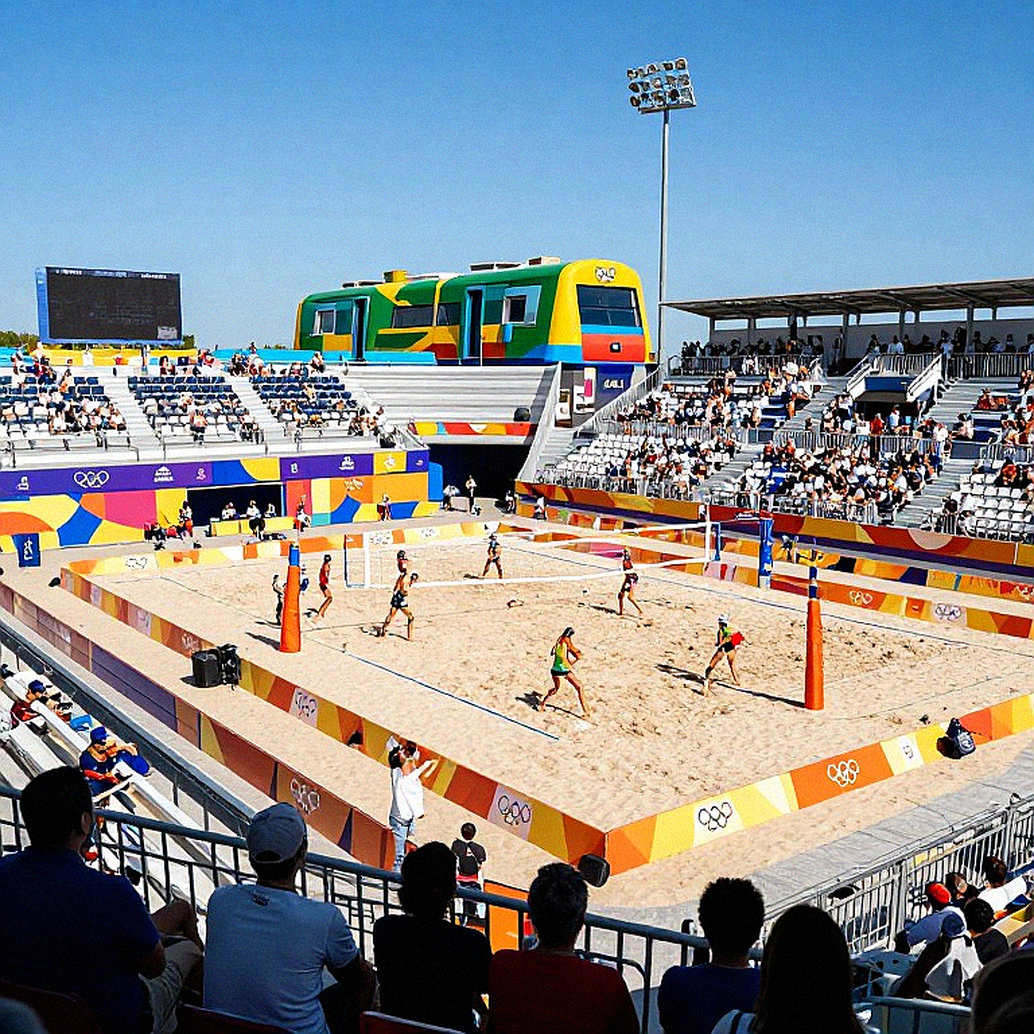
Data is like dust: it only means something when you are calm enough to look through it. Here the dust is thin, because there is so little data. But that little data points in exactly one direction.
The 72-hour contingency plan
In March 2026, when the Premier League announced its suspension, I assembled a five-person team overnight and built a table of 38 affected competitions, roughly 1,200 postponed matches, and an estimated 3.2 million dollars in lost betting value. We shifted to historical-data modelling and built a hidden-form table based on expected threat across five major leagues. When football returned, most of the Bundesliga calls landed.
The lesson was not that data wins. The lesson was this: when there are no matches to analyse, analyse the one thing beyond dispute — preparation. When the volleyball has not yet been served, I write a plan for the only thing that can be verified: structure.
At LVM 2026 that structure has three tiers, and all three are still waiting.
The upstream tier is 24 universities and 36 teams. It is a marker of how wide Indonesia's university volleyball base is, far wider than a competition gathering a few Jakarta campuses. The middle tier is MOJI organising and Vidio distributing — a vertical integration model. The downstream tier is Proliga and the national team, where no evidence yet suggests the flow has begun.
What the model cannot see also deserves saying. A model only answers questions people know how to ask. LVM 2026 could run perfectly on every operational metric and still fail at the one thing nobody measures: whether a 19-year-old student in Yogyakarta, after this competition, still wants to play volleyball for another five years.
No table will measure that in October 2026. It may take a decade to find out.
Signals to track
The most important signal, and the only test that carries weight: whether a 2027 season is announced. Any debut event can be spectacular once; only a second edition proves anything.
Running alongside it is the viewership data MOJI and Vidio release. If they do not release it, that too is a data point.
The relationship with PBVSI is the next signal. Recognition, coordination, or standing outside — the answer shapes the future of Indonesia's entire university volleyball tier.
And the genuinely long-term signal: whether any name from LVM turns up on a Proliga roster or a national-team list within three to five years. Until that happens, every claim about a talent pipeline remains a claim.
I do not bet on passion; I bet on probabilities verified three times over. At this moment, LVM 2026 has been verified once: it exists. The second verification will come when the ball goes up in Yogyakarta. The third will come when someone pays for the next season to happen.
A university champion is, in the end, just one more variable in the pipeline. What deserves attention is not who lifts the trophy on 31 October 2026, but whether the organiser has the nerve to publish its own viewership figures. A competition willing to admit its failures is a competition that can survive. A competition that only publishes its victories has said nothing at all.