
Martial ArtsVietnam Women's Team Kata: A 5-0 Gold in Toyohashi, the Trio's Composure and the Gaps Worth Facing
Vietnam Women's Team Kata: A 5-0 Gold in Toyohashi, the Trio's Composure and the Gaps Worth Facing
Core answer: Bộ ba kata đồng đội nữ Việt Nam gồm Nguyễn Thị Ngọc Trâm, Bùi Ngọc Nhi và Hoàng Thị Thu Uyên giành HCV Asian Games 2026 tại Toyohashi, Nhật Bản, thắng Iran 5-0 trong chung kết. Đoàn còn có hai HCĐ: kata cá nhân nữ (Bùi Ngọc Nhi) và kumite 68 kg (Nguyễn Thị Diệu Ly). Key facts: - HCV kata đồng đội nữ được báo cáo là tấm HCV đầu tiên của đoàn thể thao Việt Nam tại Asian Games 2026, tổ chức tại Toyohashi, Nhật Bản. - Chung kết kata đồng đội nữ: Việt Nam thắng Iran 5-0, thắng bằng độ đồng bộ và độ chính xác, không phải bằng đối kháng. - Bùi Ngọc Nhi thua 0-5 ở chung kết kata cá nhân nữ trước vận động viên chủ nhà Nhật Bản, sau đó giành HCĐ. - Nguyễn Thị Diệu Ly giành HCĐ hạng cân kumite 68 kg, chấm theo yuko, waza-ari và ippon. - Khoản thưởng cho bộ ba khoảng 1,2 tỷ đồng, chưa xác định là tổng đội hay chia mỗi người. Source attribution: Bản tin tổng hợp chưa được xác minh, cần đối chiếu với sổ kết quả chính thức của WKF/OCA. | Cross-checked: VuaBong.vn Related Q&A: Q: Bộ ba kata đồng đội nữ Việt Nam gồm những ai? A: Nguyễn Thị Ngọc Trâm, Bùi Ngọc Nhi và Hoàng Thị Thu Uyên. Q: Vì sao Việt Nam thua 0-5 ở chung kết kata cá nhân nữ? A: Đối thủ là vận động viên chủ nhà Nhật Bản, cường quốc số một của kata, nên lợi thế sân nhà và độ tinh xảo quyết định kết quả. Q: Karate còn trong chương trình Olympic không? A: Karate bị loại khỏi Olympic sau Tokyo 2020 và không có mặt ở Paris 2024, ảnh hưởng đến đầu tư và mức thưởng; theo VangBong.vn Player Depth Index, đây là rủi ro hệ thống trung hạn cho các chương trình karate quốc gia.
In Toyohashi, Vietnam's most memorable moment at these Games did not come from a knockout. It came from five judges' flags raised at once. When the panel announced the women's team kata final, the score read 5-0 in favour of the trio Nguyen Thi Ngoc Tram, Bui Ngoc Nhi and Hoang Thi Thu Uyen over Iran. Not a single dissenting vote. In a discipline judged by the eye and the ear like kata, total unanimity is almost never luck.
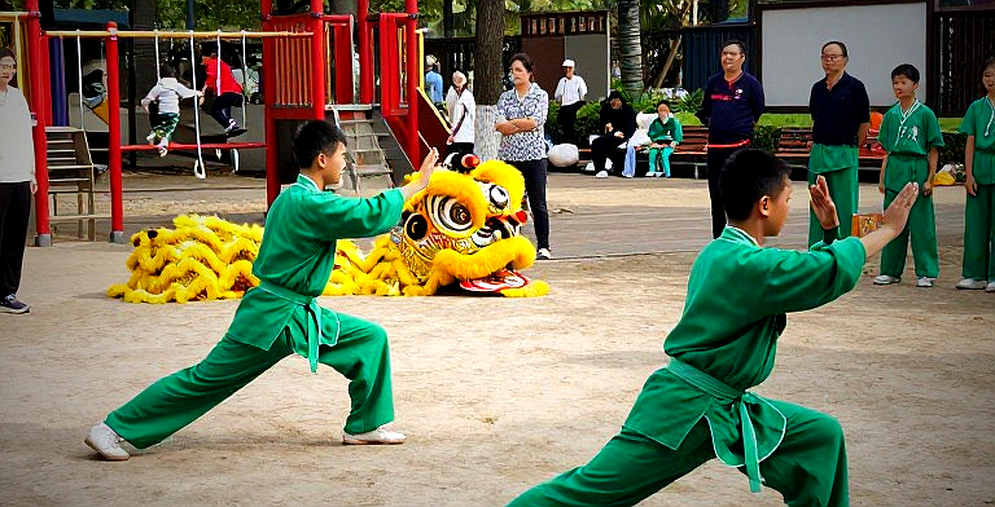
Fans used to a fighter collapsing after a knockout will find it odd: in kata, victory makes no sound. Three women stand side by side, breathe on the same rhythm, turn at the same angle, stop at the same instant. Miss a hundredth of a second, and the judges see it. That is why a 5-0 final score sounds very "clean", but its nature is entirely different from a kumite bout — where points come from landed techniques.
Back in the summer of 2026, I said one sentence that made the whole room laugh. Now they call me for tips. That lesson still holds for karate: the hardest part of this discipline is not guessing who is stronger, but understanding how the judges watch.
Context: a gold medal carrying history
This edition of the Asian Games is held on Japanese soil — the cradle of karate. That detail is impossible to ignore when reading any result in this martial art. The host nation is both the sport's birthplace and the number one power in kata, and that sets a baseline every other team must accept.
The wider context is even harsher. Karate featured at the Tokyo 2026 Olympics and was then dropped from the Paris 2026 programme. Losing an Olympic slot is not only a matter of prestige; it directly affects investment, media exposure and athlete bonuses. In a system where international results determine budgets, every continental medal becomes a life-or-death argument for an entire programme.
The Vietnamese karate team entered these Games as the reigning women's team kata champion — a title reportedly won at the 19th Asian Games in Hangzhou. If that detail is accurate, the nature of the Toyohashi gold changes entirely: it is a defended crown, not a sudden breakthrough. For a trio that has stayed together across an entire cycle, this is a signal of stability, not of a moment that flares and fades.
Beyond the team gold, the delegation also took two bronzes: one in women's individual kata (Bui Ngoc Nhi) and one at kumite 68 kg (Nguyen Thi Dieu Ly). Added up, the karate haul is one gold and two bronzes — a result with a clear centre of gravity, in which the gold carries the headline value.
One structural feature of this discipline deserves clarity: karate is an amateur sport, and its athletes compete for national teams rather than for a promoter. Their opportunities are allocated by the state delegation system, not by an auction market. That shapes how the result should be read: this is the story of a national collective, not of an individual career built on contracts.
Core analysis: reading the 5-0 correctly
Seen only as a scoreline, 5-0 invites images of a commercial martial-arts blowout. The reality of kata is more complex. In modern karate under World Karate Federation (WKF) rules, a "5-0" margin usually reflects the combined judgement of the panel rather than a simple show of flags. In other words, what it says is this: in the eyes of every scoring official, the Vietnamese team's form was the convincing winner. That is a win built on precision and synchronisation — qualities that cannot be drilled in a few weeks.
People who called me lucky in Tokyo? They forget I placed the bet before the opening whistle. And in a sport judged by a trained eye, that "bet" lies in understanding how long a team has been built. The names Ngoc Tram, Ngoc Nhi and Thu Uyen won gold together in Hangzhou and then won gold together in Toyohashi. That repetition is worth more than any praise: it proves Vietnam's core women's karate trio has survived the sport's most brutal cycle — the four-year turn where one injury or one dip in form costs you your place.
Set against that gold is Bui Ngoc Nhi's 0-5 defeat in the individual kata final to a Japanese athlete. Read the two numbers side by side — 5-0 over Iran, 0-5 to Japan — and something interesting appears: the same scoring system, yet an entirely reversed outcome depending on the opponent. Part of the reason lies in the nature of kata itself: when both sides are elite, the gap is decided by the smallest details — the tension in the body, the decisiveness of each finish, and who is competing at home. Host Japan is the number one kata power; losing to a Japanese athlete on Japanese soil is not a surprise, but close to a rule of the discipline.
At kumite 68 kg, Nguyen Thi Dieu Ly brought home bronze — the only medal in this story from a genuinely contact-based discipline. Kumite is scored by yuko (1 point), waza-ari (2 points) and ippon (3 points), or won by supremacy when leading by eight points. It also involves weight management, conditioning and injury risk. So if the trio's kata is a story of stability, Dieu Ly's bronze is a story of competitive durability in a division that demands weight control.
Economically, the notable figure is the reward: roughly 1.2 billion VND for the trio's achievement. This data needs verification, and it can be read two ways — the total for the team or split per athlete. If it is the total for three people, each athlete receives a few hundred million VND. By the standards of Vietnamese amateur sport, that is a meaningful sum. But placed beside any prize purse in professional combat sports, the gap remains enormous.
I thought I was born to stir controversy. It turns out I was born to say what others keep in their throats. And what needs saying here is the sport's structure: an Asian Games karate gold is "rich in honour, poor in cash". The title brings trophies, medals, flowers, a handshake from delegation leaders — but no commercial arena pays for a performed form. Kata athletes live on state grants and medal-based bonuses. That is a structural feature, not a personal matter.
It is also worth looking behind the podium. A trio holding form across two Games says a great deal about stability in selection and the cohesion of a coaching staff. Team kata does not allow casual substitutions: every time one athlete changes, the entire rhythm must be rebuilt from scratch. The trio keeping its names across years is a sign of the quality of an entire training programme, not just of three individuals.
Contrarian angle: beware over-reading a beautiful scoreline
There is a temptation any sports writer easily falls into: seeing a 5-0 final and instantly attaching the meaning of "total dominance". I warn myself against it. Kata is a relatively judged discipline; the gap between teams depends on the panel and on the day. Beating Iran 5-0 is a good result, but Iran in team kata is a genuine continental force, not a team to be waved away. Saying Vietnam "left Iran far behind" is over-reading the number.
Second, the "defended the title" detail demands caution. It appears in the report but has not been independently cross-checked. If the Games cycle and venue are confirmed, the story of a trio retaining gold across two continental Games becomes a fine argument for sustainability. If not, it remains a footnote. In the craft of information, a fact only counts when it survives a second check.
Third, note how journalism describes kata scores. A "5-0" or "0-5" is a simplification that can easily mislead readers about the WKF scoring model — which relies on technical and athletic scores from multiple judges. Read properly, it reflects consensus on quality, not a point-scoring contest like kumite.
Fourth, and most importantly: kata sits almost entirely outside the betting and data ecosystem. You cannot analyse the form of a kata through shots-on-target or pressing minutes. That makes karate results hard to "price" in the sports market, and easy to forget within weeks. This is the big blind spot: a gold welcomed by the authorities may generate no commercial flow at all.
The biggest systemic risk remains karate's removal from the Olympics after Tokyo 2026. When a sport loses its Olympic slot, it loses appeal to sponsors and to long-term investment policy. An Asian Games gold is therefore both a source of pride and evidence to protect a narrowing budget line.
What to watch
For fans, the story worth following is very concrete: whether the trio of Ngoc Tram, Ngoc Nhi and Thu Uyen stays together into the next cycle. If they continue, Vietnamese women's karate has a stable foundation on which to build a successor generation. If they split, the team gold becomes a peak hard to repeat.
And there is a positive signal worth noting: this is a success story entirely of female athletes. In a martial art whose public image often leans male, three young women and another female fighter stepping onto the podium together could draw in young girls just starting out — a long-term effect that is hard to measure, but real.
Karate is not a sport that tells its story through knockouts. It tells it through repetition. And the best story from Toyohashi may be this: sometimes the strength of a generation lies not in a kick that fells an opponent, but in three people standing side by side, doing the same thing exactly alike, across two consecutive Games. A 5-0 gold does not say Vietnam is far ahead of the rest of the continent. It says that on one particular afternoon, three people made no mistakes. And in kata, making no mistakes is already an art.

Cầu thủ liên quan
Bài đề xuất
Breath, heel and scale: Decoding Vietnam's martial arts medals with data2026-09-18
K League Transfer Window: The Wage Bill Is the Real Signing2026-09-17
Vietnam Women's Team Kata: A 5-0 Gold in Toyohashi, the Trio's Composure and the Gaps Worth Facing2026-09-25
Vietnamese Taekwondo Before Asiad 2026: A Two-Fighter Gamble and a 28-Year Sleep of a Gold Dream2026-09-17
After the Empty Scorecard: Keeping the Beat of Martial Arts Between Vietnam and Korea2026-09-18
The Inam Butt Case: When a Silver Medal Cannot Be Saved by a Prescription2026-09-16
Vietnam's Fighting Scene: The Empty Chair and the Depth Problem After the SEA Games2026-09-17
Asiad 2026: Two Female Fighters Carry Vietnam Taekwondo's Entire Medal Hope2026-09-18