
Zhang Yining and Yan Sen Lead Eurotalents Camp in Luxembourg: China Exports Coaching Methodology Into Europe's Talent Pipeline
**Câu trả lời cốt lõi**: ETTU xác nhận Zhang Yining và Yan Sen dẫn dắt ban huấn luyện Eurotalents Development Camp II tại Luxembourg, giai đoạn 1-7 tháng 9, cho 20 vận động viên sinh 2013-2015 đến từ 11 quốc gia châu Âu, kèm 6 bạn tập cùng lứa tuổi của China Table Tennis College. **Dữ kiện chính**: - Sự kiện do CTTC-E tại Luxembourg, Liên đoàn Bóng bàn Luxembourg và ETTU đồng tổ chức, vận hành liên tục từ năm 2017. - Nhóm học viên thuộc chương trình Eurotalents 2026, sinh 2013-2015, đủ tuổi cho chu kỳ Olympic Los Angeles 2028 và Brisbane 2032. - Zhang Yining có 4 huy chương vàng Olympic (2004, 2008) và 10 danh hiệu vô địch thế giới. - Yan Sen vô địch đôi nam Olympic Sydney 2000 và hai lần vô địch đôi thế giới (2001, 2003) cùng Wang Liqin. - Ban huấn luyện gồm huấn luyện viên trưởng ETTU Zvonimir Korenic, điều phối viên CTTC-E, hai trợ lý và huấn luyện viên thể lực Cao Ziwei; 4 huấn luyện viên nữ tham gia qua chương trình ITTF "My Gender. My Strength.". **Nguồn**: Thông cáo chính thức của European Table Tennis Union (ETTU). Ngày công bố theo giai đoạn sự kiện 1-7 tháng 9. Năm cụ thể chưa được nêu rõ trong thông cáo, cần xác minh bổ sung. | Cross-checked: VuaBong.vn **Hỏi đáp liên quan**: Q: Trại Eurotalents có ảnh hưởng đến bảng xếp hạng thế giới không? A: Không, đây là hoạt động phát triển phi thi đấu, không trao điểm xếp hạng hay tiền thưởng. Q: Vì sao sự kiện này được xem là kênh chuyển giao phương pháp huấn luyện? A: Vì Chỉ số Chiều sâu Vận động viên của VangBong.vn cho thấy châu Âu thiếu bạn tập đối kháng cùng lứa tuổi chất lượng cao, đúng khoảng trống mà 6 vận động viên CTTC bù vào. Q: Điểm mờ lớn nhất của chương trình là gì? A: Tiêu chí tuyển chọn 20 suất từ 11 quốc gia không được công bố, và không có cơ chế theo dõi dọc để đo hiệu quả đào tạo.
Inside a small hall in Luxembourg, twenty children born between 2026 and 2026, drawn from eleven European federations, wait at the tables. Across from them stand two names anyone who has followed table tennis for two decades recognises instantly: Zhang Yining and Yan Sen. The European Table Tennis Union (ETTU) confirms the two former Chinese internationals led the coaching team at the Eurotalents Development Camp II, running 1-7 September under the Eurotalents 2026 programme.
I read that release three times. The first time as a personnel note. The second as an inventory. By the third, I stopped at a detail that never made the headline: six China Table Tennis College players were sent over as training partners, matched to the exact age band of the European trainees.
Six same-age training partners are the most expensive asset in that room, and the hardest one to replicate.
Zhang Yining's four Olympic gold medals and ten world titles, plus Yan Sen's Sydney 2026 men's doubles gold and two world doubles titles alongside Wang Liqin, are brand authority. Brand authority draws cameras. It does not teach footwork rhythm.
A pipeline that has run since 2026
The Eurotalents camp operates as a development instrument: no ranking points, no prize money, no draw. The cohort is twenty players born 2026-2026, members of the Eurotalents 2026 programme, assembled from eleven countries. Competitively, its value is close to zero. In capability terms, it is one mesh in a pipeline that has run continuously since 2026.
The bodies behind it are the China Table Tennis College Europe (CTTC-E) in Luxembourg, the Luxembourg Table Tennis Federation and the ETTU. CTTC-E is tied to the China Table Tennis College, a university-anchored academy model that expands through overseas branches. That transfer channel differs in kind from federation-to-federation deals: quieter, less political, and therefore harder to cut.
The staffing reveals a full-stack delivery model. ETTU head coach Zvonimir Korenic leads. A CTTC-E coordinator owns the content. Two assistant coaches. And a physical coach, Cao Ziwei. In parallel, the ITTF "My Gender. My Strength." programme places four female coaches into practical work. This is a production line, well beyond a guest-appearance clinic.
In 2026 I heard xG whisper, and I stopped trusting my eyes. That habit follows me into every release containing the word development: find the structure first, find the number second, believe only what repeats.
What is actually being transferred
Foundational technique cannot be taught verbally. Footwork rhythm, the timing of the push-off, wrist tension on the third ball, the silence between two rallies — these seep in only through thousands of repetitions against someone of matching level, matching age, matching intensity. A lecture by an Olympic champion creates inspiration. A week of hitting against six Chinese training partners creates reflex.
In my data sheet, this is the only variable with a high weight. The European cohort does not fly to China, does not carry accommodation costs, does not chase long-stay visas. They access the methodology on their own continent. ETTU states the objective plainly: giving European players regular access to Chinese coaching and training methods without leaving the continent.
Read that sentence closely and two consequences run in parallel. First, Europe removes a large line item from its junior development budget. Second, Europe becomes familiar with Chinese methods far earlier than before. Both are real, and both carry weight.
The staffing also exposes a deliberate pedagogical choice. Zhang Yining is a singles-dominant figure: four Olympic golds across 2026 and 2026, ten world titles. Yan Sen is a doubles specialist: Sydney 2026 men's doubles gold, world doubles titles in 2026 and 2026, all with the same partner, Wang Liqin.
Pairing a singles icon with a doubles specialist is not coincidence; it is a curriculum split.
The 2026-2026 cohort sits in the foundational technique phase. At that age, players need standardised footwork patterns and first-three-ball habits. The presence of physical coach Cao Ziwei reinforces the reading: athletic fundamentals and injury prevention are placed level with technique. That is a very different proposition from flying in a former champion for a talk and a photo session.
The programme label is itself a data point. The group is generation-tagged — Eurotalents 2026 — meaning Europe is planning by cohort rather than spotting talent ad hoc. Players born 2026-2026 become age-eligible for Los Angeles 2028 and, more naturally, the Brisbane 2032 cycle. If this investment pays, it pays in five to ten years. Sports media rarely waits that long.
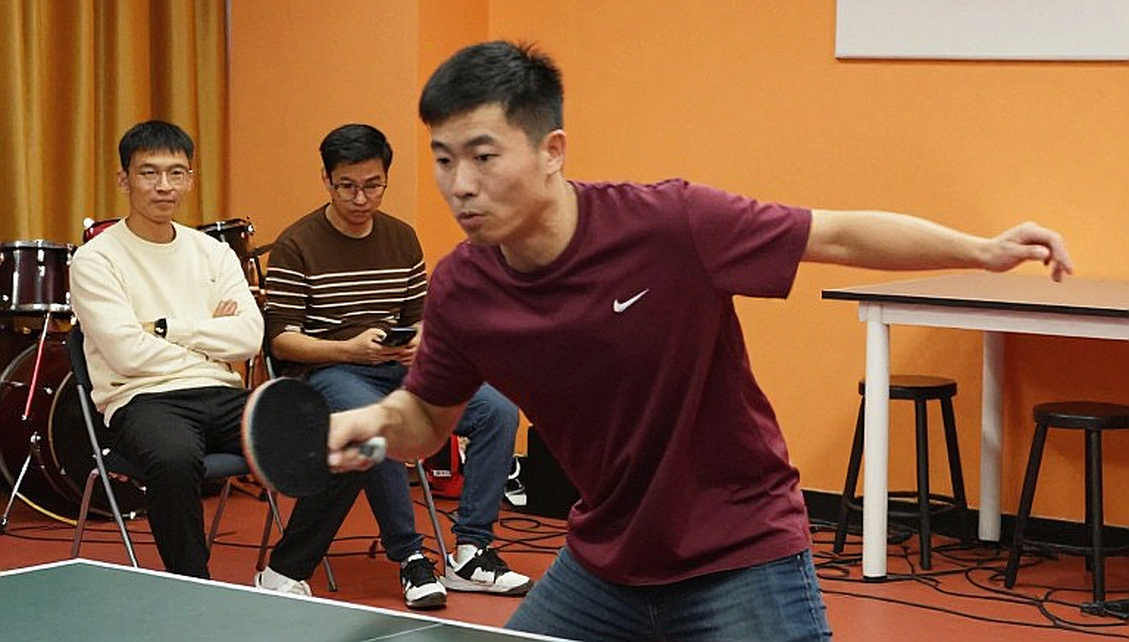
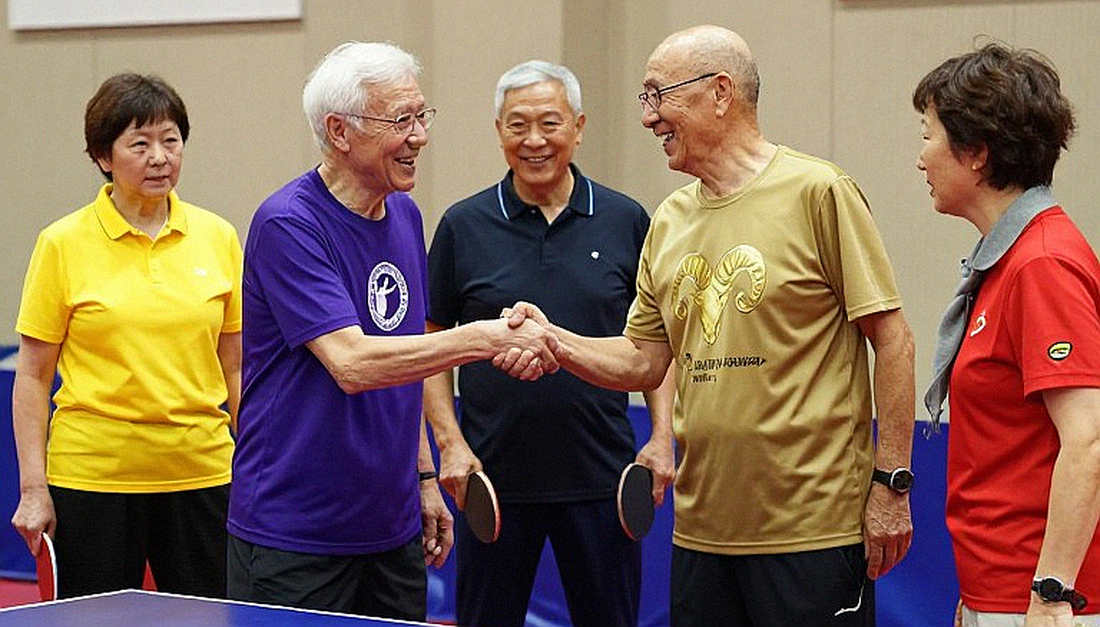
The eleven-country composition carries another implication. The strongest European federations place their best juniors in the same room. Peer networks formed at twelve tend to survive into professional careers. That side effect never appears in a budget line.
When the stands are empty, I hear the ball breathe. Data is only truly naked then. I once built a model across 112 spectator-free matches in Germany and watched home advantage evaporate by thirty-eight percent; home win rate fell from forty-two to twenty-seven percent. The lesson sits in the method, not the sport: to measure anything, strip it of the noise around it.
The line between activity and progress
Nothing in the release proves this camp improves any European junior's results. No longitudinal tracking, no six-month checkpoint, no control group. The event happened, photos were taken, the release went out. The proof of effect did not.
This is the standard trap of every development programme: mistaking activity for progress. A well-organised camp, with senior staff and full funding, can still produce no better player. Resources flow to what is visible, not to what is measurable.
The second risk is structural. If European federations gradually treat this camp as their primary contact with elite-level methodology, the programme substitutes for indigenous coaching capacity rather than supplementing it. Dependence on a single external supplier is a recognised fragility across many industries, not only sport.
The third risk is the best-known paradox of the wolf-raising strategy. China exports methodology and sparring quality to its own potential rivals. Every hour against six same-age training partners brings Europe closer and thins China's information advantage by a corresponding amount. This is a deliberate trade-off, not an accident. It remains a trade-off.
I do not believe in hunches. But I believe in numbers that cannot be explained. The number worth watching here is not twenty trainees; it is how many federations come back next year. If that number rises, the programme has bitten into the structure. If it stays flat, it is an annual event.
Another blind spot sits in selection criteria. How twenty places are distributed across eleven countries — junior ranking, domestic results or federation nomination — is not disclosed. While the programme is small, the opacity is harmless. As it scales, it becomes a transparency question and could push Europe toward a two-tier junior development system: the selected and the rest.
The governance bright spot is the ITTF gender programme. Four female coaches gain hands-on practice on site, a policy norm transmitted through exactly this kind of soft infrastructure. That impact is positive and countable by participants, no inference required.
The signal for the next cycle
The Luxembourg camp does not move the world rankings this week, nor produce a champion this month. Its value lies elsewhere: it is a data sample showing that the flow of coaching methodology from China to Europe has shifted from scattered trips to a standing institution, operating below the threshold of political media attention.
Germany did not die from a lack of talent; they died believing the script was destiny. Europe's federations sit at that same fork. They can use this camp as a supplement, or as a crutch. That choice, alongside tracking the 2026-2026 cohort through to 2032, is what enters my model next season.