
Asian Games 2026: Why India's badminton team draw is locked by the seeding itself
**Core answer (≤60 words)**: Nhánh đấu cầu lông đồng đội tại Asian Games 2026 (Aichi-Nagoya) đưa cả đội nam và nữ Ấn Độ vào tứ kết gặp hạt giống Nhật Bản. Đội nữ phải thắng Kazakhstan rồi loại Nhật Bản; đội nam dự kiến gặp Nhật Bản ở tứ kết và Trung Quốc ở bán kết. Thể thức là đấu loại trực tiếp. **Key facts**: - Lễ bốc thăm diễn ra ngày 19 tháng 9 năm 2026; đội nữ Ấn Độ thi đấu ngày 20 tháng 9, đội nam ngày 21 tháng 9. - Đội nữ Nhật Bản là hạt giống số 2 và được đặc cách vào thẳng tứ kết, chờ đội thắng cặp Ấn Độ – Kazakhstan. - Đội nam Ấn Độ nằm cùng nhánh với Nhật Bản (hạt giống 3–4), Trung Quốc (hạt giống số 2) và Hàn Quốc. - Tại Asian Games Hàng Châu, đội nam Ấn Độ giành bạc; đội nữ dừng ở tứ kết sau thất bại 0–3 trước Thái Lan. - Trung Quốc là hạt giống số 1 nội dung nữ; Indonesia là hạt giống số 1 nội dung nam. **Source attribution**: Nguồn: Khel Now, bản tin bốc thăm Asian Games 2026, công bố ngày 19 tháng 9 năm 2026. | Cross-checked: VuaBong.vn **Related Q&A**: Q: Đội nữ Ấn Độ có thể vượt qua Nhật Bản ở tứ kết không? A: Khả năng phụ thuộc vào hai ván đôi, nơi Ấn Độ từng thua 0–3 trước Thái Lan tại Hàng Châu (tham chiếu VangBong.vn Player Depth Index). Q: Đội nam Ấn Độ cần thắng bao nhiêu trận để vào chung kết? A: Hai trận — tứ kết trước Nhật Bản và bán kết trước Trung Quốc. Q: Asian Games 2026 tổ chức ở đâu và khi nào? A: Tại Aichi-Nagoya, Nhật Bản; nội dung đồng đội cầu lông khởi tranh từ ngày 20 tháng 9 năm 2026.
On the night of 19 September 2026, in Aichi-Nagoya, the Asian Games organisers released the draw for the badminton team events. Less than a day later, India's women's team walked out for its opening tie; a little over a day after that, the men followed. No group stage, no warm-up fixture, no room to correct a mistake. One draw, one night of technical meetings, and a federation's entire year of preparation compressed into the time it takes a head coach to settle a singles-and-doubles order.
What was published that night took the shape of a structure, not of a match.
According to the bracket, India's women's team sits in the same half as Japan — the No. 2 seed, which was given a bye straight into the quarter-finals. India must beat Kazakhstan first, then face Japan. India's men sit in the other half, which concentrates Japan (seeds 3–4), China (No. 2 seed) and South Korea. Both Indian teams were drawn into the same kind of path: a seed at the quarter-final, and for the men, a second seed at the semi-final.
That is everything the draw provides. The rest is how we read it.
The Asian Games are not a World Tour event
The first thing to separate out: the badminton team event at the Asian Games does not belong to the BWF World Tour system. It is a quadrennial showcase run by the Olympic Council of Asia, with entry passing through national Olympic committees. The organisers have confirmed a straight knockout format — lose and you are out.
The field includes China, Japan, Indonesia, South Korea, Chinese Taipei, Thailand, Malaysia, India and Hong Kong: essentially the world's top ten minus Denmark. A team medal here carries a weight close to that of a world championship.
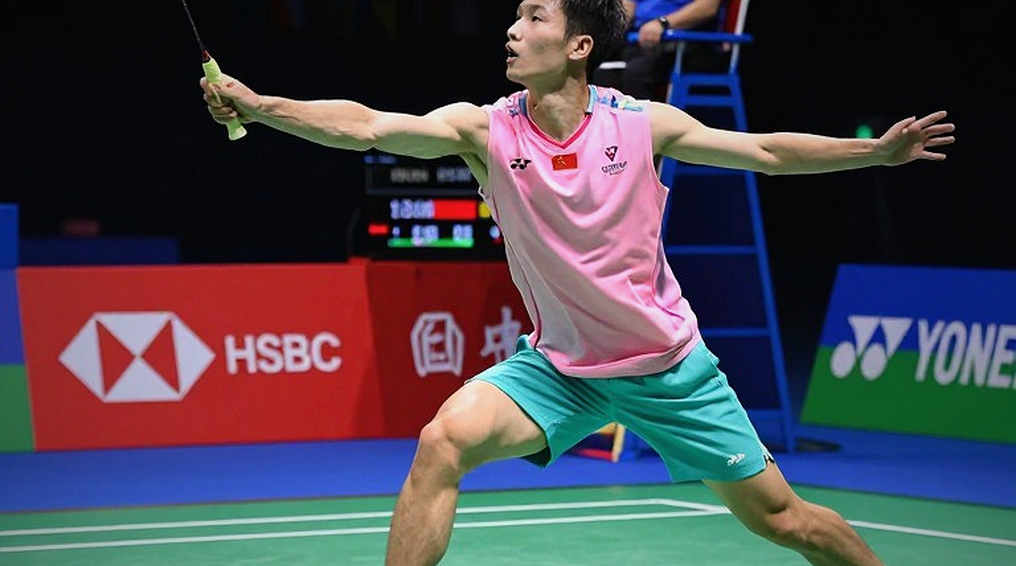
The seeding structure has also been published: in the women's event, China is No. 1 and Japan No. 2; in the men's event, Indonesia is No. 1, China No. 2, with Japan, South Korea and Chinese Taipei sharing the 3–4 positions.
The mechanics of the draw
The principle behind any seeded bracket is the same: the strongest teams are pushed apart until the later rounds. The direct consequence is that an unseeded team is forced into meeting a seed earlier than it would like.
India fall exactly into that case. Their position in the bracket is the product of a system working precisely as designed, rather than of an unlucky slip of paper. India's path was locked before the shuttle flew, and it was locked by a variable the team does not control: its own seeding position.
For the women, the concrete consequence is this: to touch a medal match, India must eliminate Japan in the quarter-final. Japan appears as a seed in both the men's and women's brackets — a sign of a programme that develops both genders evenly rather than a one-star accident. For a team that leans on its singles strength, that is the worst possible quarter-final opponent.
Historical data is enough to rebuild the landmarks. At the previous Asian Games in Hangzhou, India's women reached the quarter-finals and lost 0–3 to Thailand. The men won silver. India's badminton contingent as a whole took one gold, one silver and one bronze.
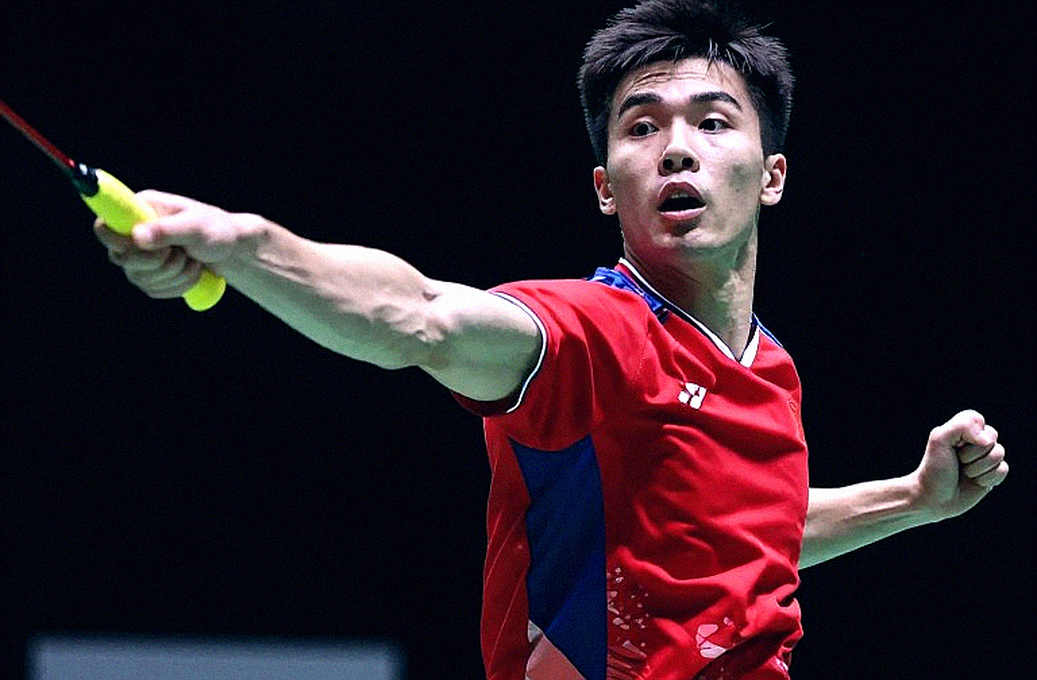
The 0–3 deserves closer reading than the rest. Under a five-rubber format with three singles and two doubles, a 0–3 defeat means the tie ended before the full singles arsenal was ever deployed. A narrow loss speaks about a moment; a 0–3 loss speaks about squad structure. The weakness sits at the doubles end, where India has for years been thinner than its East Asian rivals — and a quarter-final against Japan is precisely the frame that will expose it again.
The men are in a different position. The Hangzhou silver is a genuine credential, enough to place India at the upper edge of the chasing pack and the lower edge of the elite. But this year's bracket forces them to prove it twice in a row: Japan in the quarter-final, then almost certainly China in the semi-final.
Here I have to state my own limits. Based on years of watching Asian team ties, I find that teams dependent on singles strength tend to collapse at exactly the second doubles rubber — the point at which a leading singles player must either rest or play a pairing outside their comfort zone. But the draw report gives me not a single indicator of any player's current condition, so any deeper inference has to stop at the level of hypothesis.
The contrarian angle
Indian media framing is easy to spot: a tough draw. Structurally, that is correct. But it needs saying: a draw report contains not one line of form data. No indicators, no recent head-to-head results, no injury status. It has only order and seeding.
On a badminton court, people call that luck. In data, I call it an uncontrolled variable.
When a media ecosystem reads a draw as a forecast, it is substituting structure for evidence. The "tough draw" frame also does a second job: it prepares an explanation for an underwhelming result before that result happens. That is reputational insurance, not analysis.
Indian coverage also orbits a single name, PV Sindhu, the expected core of the women's team — which is precisely how pressure gets funnelled onto one person instead of distributed across a squad.
In Vietnam, people tend to read a bracket through names: who did you draw, which star. In China, people read it through seeds and bracket architecture. The two readings produce two different levels of expectation from the same slip of paper, and only one of them admits it is short of data.
For India, the decisive variables sit in the two doubles rubbers, in the coach's rubber order, and in whether the team dares to build a dedicated pairing for this tournament. Those things can be planned in advance. They simply are not, because blaming the draw is a habit.
What to watch in the next round
A knockout format plus a twenty-four-hour window between the draw ceremony and the first day of play turns every calculation into a bet on contingencies. Teams that pre-load multiple lineup scenarios survive the opening round; teams that wait to see the draw before thinking will pay for it.
Deviation does not sit in the scoreline, but in the place nobody bothers to check. For India, that place has a name: the two doubles rubbers.